Must Reads: For anyone who thinks they can have it all

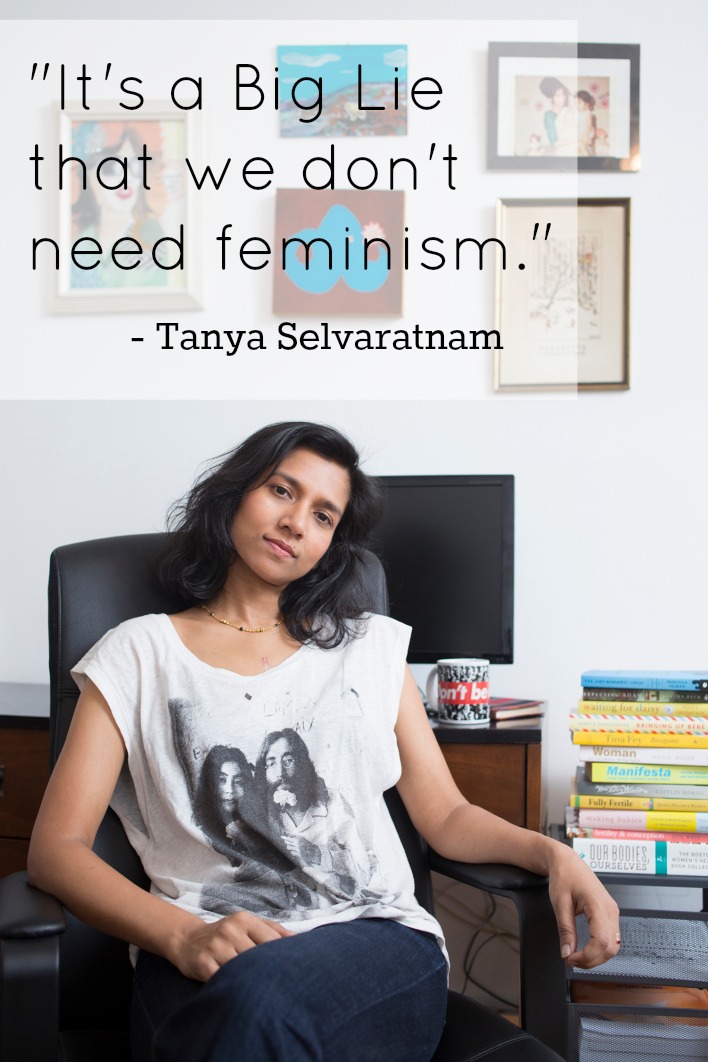
Tanya Selvaratnam

Photo by Naomi White

Last month, I read what has easily become my new favorite non-fiction book.

The Big Lie: Motherhood, Feminism, and the Reality of the Biological Clock by Tanya Selvaratnam is the perfect combination of smarts and heart. What business does someone like me, who still shudders at the thought of having a child any time soon, have reading a book about motherhood? Ah, well, lots, actually. The information and message in this book pertain to anyone who might want to become a parent some day.

The book addresses the harmful myth that we can “have it all” and make babies when it’s most convenient—like say, after we’ve established a career and settled comfortably into adulthood. Selvaratnam packs a lot of stats and research about fertility into her book. Did you know 10 percent of the world’s population experiences fertility issues, which affect all people (rich/poor, black/white, male/female) equally? And that the initial drop in fertility among women happens as early as 25 to 29 years old? Which is not to say you should be freaking out if you are 30 or older—but you should be empowering yourself with the knowledge of such facts.

The Big Lie is not all statistics and percentages, though.

What surprised me most about it is how much Selvaratnam’s personal story with three miscarriages and a cancer discovery humanized everything I was learning throughout the book. She really gets vulnerable here, and I found myself teary-eyed and cheering Selvaratnam on along the way. That’s what really set this book apart for me.

Though I haven’t read Sheryl Sandberg’s Lean In yet, I think anyone who has read it (whether they agreed with it or not) is likely to enjoy The Big Lie. It touches on similar issues, but comes from a generally more relatable perspective—as in, the COO of Facebook didn’t write it.
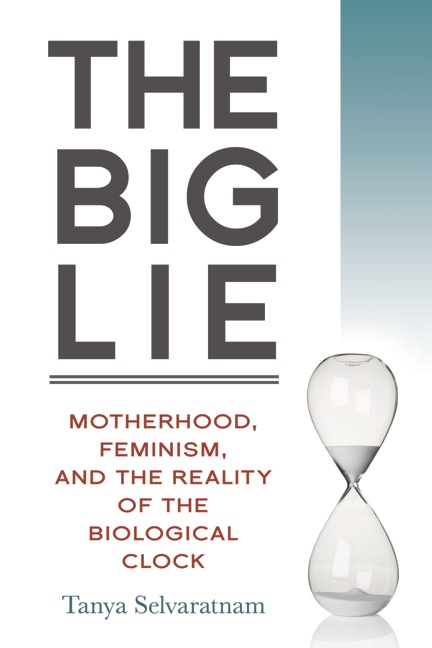
The Big Lie

I had the chance to do a Q&A with Selvaratnam over at Neon Tommy, and she shared some wise and thoughtful words. Here’s an excerpt from the interview:

“When someone says feminism is no longer necessary, I think, Tell that to the mother raising five kids who can’t get paid as much as a man to do the same job; tell that to the woman who is treated as the aggressor when she is raped; tell that to the girl who isn’t allowed to learn how to read. It’s a Big Lie that we don’t need feminism.”

We also talked about Millennials having a harder time than earlier generations to afford children, as well as the importance of having conversations with our partners and doctors about our eventual plans for children. Tanya also had some fantastic book recommendations for anyone interested in these topics. You can read our conversation (and find out what the “big lie” is) here.

The Big Lie has already gotten a lot of attention from the press, and I hope it becomes one of those books you see popping up all over the blogosphere. Check it out for yourself, and let me know what you think!
The F-word

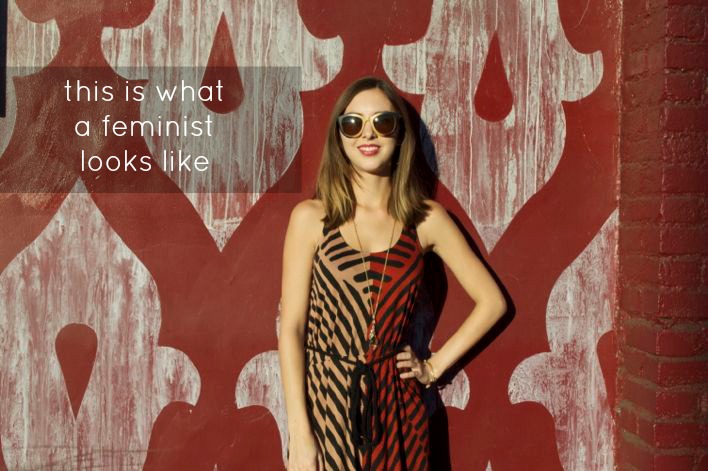
this is what a feminist looks like

It’s hard to believe now, but just a few years ago, I wouldn’t have considered myself a feminist.

I believed in equality. I was into “girl power,” in a Spice Girls sense of the phrase. And I was lucky enough to have had tons of great female role models who inspired me growing up.

So why didn’t I see myself in the word “feminist”?

We’re all well aware of the negative connotations associated with feminism. You’d think most people would understand by now how ridiculously off-base the “angry, hairy man-hater” stereotype is. But too often the comments section beneath articles written by or about a woman makes clear there are a lot of sexist trolls who have yet to die off. (Reminder to self: never read the comments if you want your faith in humanity to remain intact.)

Sadly, the trolls who perpetuate these stereotypes about feminists are pervasive. So is ignorance, which I once blissfully possessed when it came to these things. That unfortunate combination is why I shied away from the F-word. I didn’t think I needed feminism. And that makes me shudder to think about.

I’m the oldest of three sisters. They’re much younger than I am but are growing up fast. I remember the kinds of things girls were talking about when I was my sisters’ ages, and it wasn’t always exactly the most female-empowering language. (Why are 12-year-old girls calling each other “sluts” and “bitches” like it’s a compliment?)

There are lots of words used to put women down. I want my little sisters to know “feminist” isn’t one of the dirty ones.

That means it’s on me and everyone else—male or female—who believes in feminism to talk about it. A lot. The more we do that, the more de-stigmatized the word and concept becomes to those who are as skeptical and hesitant as I once was. Luckily, there are more platforms than ever to help us do just that, and there are plenty of people who get into more nuanced discussions than I can (at this relatively early point in my feminist career, anyway).

It’s a wide-ranging topic for sure, but a few examples of some of the things I’d like to talk more about are:

  • Calling out manipulative ad campaigns like the Dove “Real Beauty” ads. This parody video takes it down perfectly and hilariously.
  • Hypersensitivity to language. Is “#BanBossy” really necessary, or should we be focusing on banning “bitch”?
  • Victim-blaming in cases of sexual assault—particularly on college campuses.

…and so many more.

Do you consider yourself to be a feminist? Why or why not?

I’d love to know about your relationship with the word and which women’s issues are close to your heart. Leave a note in the comments—or better yet, write your own post about it and send me a link when you do!

You are enough

You ever feel like you miss the mark? Like you’re not smart, talented, likable, insert-your-own-adjective-here enough?

If you’re thinking “hell yes,” you’re human. If you’re thinking “no, never,” you’re lying.

Insecurity doesn’t discriminate—we’ve all been graced by its looming presence. For some it’s uncommon, but when it hits… it hits like a train. For others, it ebbs and flows in waves—tolerable, but annoying at best. For others still, it’s a constant. It’s almost unfair how some people seem wired to be in a ongoing state of self-doubt.

No matter which category you fall under, it’s worth hearing:

You are enough.

Right now. As you are. Where you are. You are enough.

You are everything you need. No one can take that away from you. And you certainly don’t need anyone else to to fill a void.

You contain multitudes.

You know that Walt Whitman poem, “Song of Myself”? That one line: “I am large, I contain multitudes.” It’s one of the most oft-quoted lines of the poem. (And that is one long poem.) It’s so simple yet so all-encompassing. And it resonates with us because it’s so damn true. If we contain multitudes, then we have the capacity to love ourselves and others. So what if those multitudes are messy and complicated? All the best artists’, geniuses’ and mavericks’ were.

So work with what you’ve got. If you’re on a path to self-improvement, start with what you have. Don’t wait for enlightenment or someone else to show you the way.

You have as much power as you give yourself. And you deserve a lot.

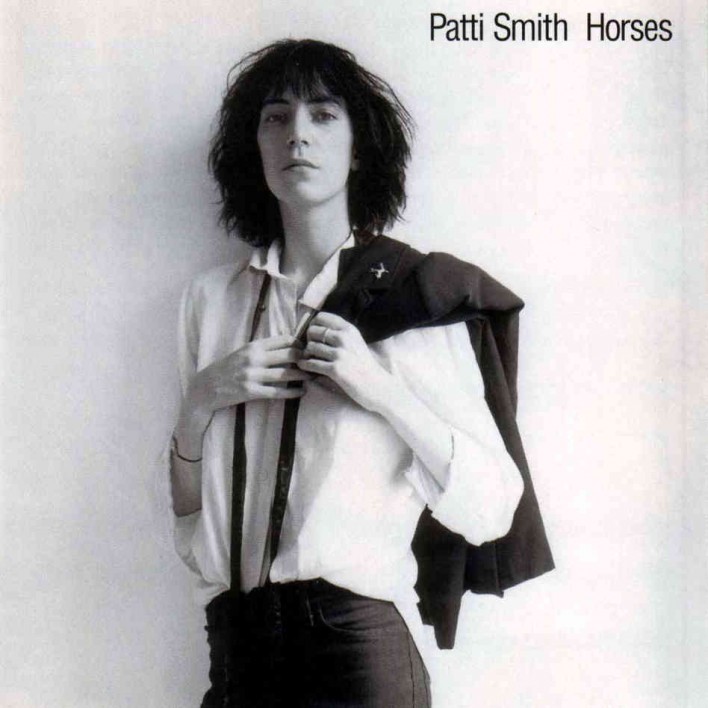
Taking art to heart: words of wisdom from a rock goddess

Patti Smith

via NPR.org

A few months ago, John and I went to see Patti Smith perform live downtown. I was a new fan having just read her National Book Award winning memoir Just Kids, and John, though not incredibly familiar with her music, was curious about my new girl crush. That night, we both left the venue energized, inspired, and starstruck. That Patti Smith? She is a badass, and one hell of a performer. And if you’ve read her book, you undoubtedly know she is full of wisdom.

So when I saw this video the other day of even more inspiring words from Patti, I took them to heart:

Patti Smith: Advice to the young from Louisiana Channel on Vimeo.

A writer or any artist can’t expect to be embraced by the people… you just keep doing your work because you have to, because it’s your calling. But it’s beautiful to be embraced… Some people have said to me, well, don’t you think that kind of success spoils one as an artist… and I say, you know, fuck you! One does their work for the people, and the more people you can touch, the more wonderful it is. You don’t do your work and say, “I want only the cool people to read it.’

And you know? That was really refreshing to hear.

Of course I’m writing primarily for myself—that’s numero uno. Of course not everyone will like it—that’s a given. Of course most people will never even read it. Is this reason enough to quit writing and feign passion for investment banking? Hell fucking no. (No offense to all you investment bankers out there, but I just shivered, and it wasn’t the good kind.)

In fact, rather than serving as cause to give up and wimper in the corner, being a relative unknown is just the opposite: I am liberated by the fact that anyone and no one at all could be reading my work at any given moment. This, for me, is the ultimate freedom.

As a blogger…

I can write a post to make you laugh.

I can write a post to make you cry.

I can write a post that attempts and fails to do either of these things.

I can write a post to make you think. (I can also write a post to make you think, WTF?)

I can write in a boat or with a goat, and the world, overall, would not notice, nor give many shits one way or the other.

But it’s worth it to know that even the tiniest fraction of a percent of the world’s population does. And because writing nothing serves no purpose for personal growth—mine or anyone else’s—I will continue to write. Never in an attempt to alienate anyone. Never in an attempt to please everyone. (Certainly not just the cool people.) If anything, I’ll be writing just to please Patti Smith, who understands that even if the majority of the world is never savvy to your creation, it’s worth every ounce of sweat and worry if it comes from a place of sincerity and touches even just one person. If you’re consistent, persistent, passionate, and genuine, chances are you’ll reach way more than just one person. Which, when you think about it, is incredible.

The kind of friend I want

cassandteeny

The kind of friend I want is…

Someone with a passion for something—anything.

Someone who understands and respects my introverted tendencies, even if they’re not an introvert themselves.

Someone I can learn something from.

Someone who considers herself a feminist.

Someone who also claims to hate people. But really actually likes people—but only the nice ones.

Someone who doesn’t make me feel guilty or superficial for wearing makeup.

Someone who loves to read, is creative, or has an appreciation for beautiful things.

Someone who, after a couple drinks, is totally down for a karaoke duet.

Someone who likes puppies. How can you not like puppies?

Someone who doesn’t thrive on constant attention or drama—and actually listens to you when you speak.

Someone who pushes me out of my comfort zone—in a good way.

Someone who doesn’t base her self-worth on her relationship status or the things she has.

Someone who has laughed at the word “poop” more than any grown woman should.

Someone whose favorite thing to do is laugh.

Someone who will accept me despite my gastrointestinal shortcomings following a pot of chili. I mean, I just don’t see that improving anytime soon.

Someone who knows she’s not perfect but loves herself anyway.

Here’s a fun exercise: Come up with a list like this for yourself. Be specific, but not so specific that you might alienate an otherwise perfectly meant-for-you person. (Not everyone you hang with has to loooove The Walking Dead. And if they do, I’m automatically off your list ’cause I’ve never even seen that show.) Then read your list. Does it more or less describe you? Or does it only describe someone you aspire to be like? It wasn’t my original intention, but I’m happy to say my list sounds a lot like me. I’d say I’m a keeper.

What do you look for in a friend? Could we be friend soulmates?

A woman to aspire to

a woman to aspire to

Like most girls growing up, I always imagined the kind of woman I’d eventually become.

I was an insecure kid with a lot of quirks and beauty I hadn’t yet dared to see in myself. I caught glimpses of it sometimes, but would end up too distracted by my imperfections and everything I hadn’t “figured out” yet. In my mind, the twenty-something version of me would be a woman to aspire to—she’d have it all figured out, and she’d be beautiful.

I’m going to go ahead and say something that might sound conceited: I am beautiful. How controversial of me to say so. How dare I love myself? But I do. Not always. Right now, for example, I look downright teenage in my snowflake pajamas without make-up on, and I constantly obsess over my perpetually dry skin that sometimes flakes or scars. But damnit, I am beautiful, inside and out. (Don’t dare to think otherwise of yourself, either. Somewhere in a parallel universe, my younger self is hearing this, and it’s working wonders.)

Anyway, so back to this picture my sweet, deluded child self had conjured up of the present me. If today I’m saying I’m beautiful (we’ll see how I feel tomorrow), then at least what I had in mind then is half-true. The other half? Not so much. I think I’ve made all the right moves so far (with several mistakes behind and certainly ahead of me), but that doesn’t mean I’ve got adolescent-turned-adult skin problems, let alone life, figured out.

Most twenty-somethings—myself included—obsess over where they’ll be living, or what career path they’ll end up on, or if they’ll get married, and WHO they’ll marry, and oh-my-God-do-I-even-LIKE-kids-let-alone-ever-want-to-have-any? And that’s about as far into the future as most of us bloggers (especially those on Thought Catalog) who deign to narrate such thoughts ever really go with it. For some reason, it seems as though we’re still slightly illuded that our future selves will FINALLY have it all figured out.

Rarely do we take the time to consider the kind of people we’ll be at 50. Or 60. Or 97. Why is that? Do we all just assume we’ll be wise, or do we think “old” (which is a relative term, anyway) people don’t have similar worries, or don’t matter quite as much because they’ve already contributed work and offspring to society? Of course they matter—those are our parents and grandparents we’re talking about. Is it just that old age seems too far into the distant future to even comprehend?

This would make sense, considering how different the world we live in now is compared with the world of our young grandparents. If society and technology and the population can take off so astronomically just in the past few decades, imagine how different it could be when our friends are dying.

So here’s a challenge to my fellow young (again, relative term!) people: envision yourself in the future. Not the ten-years-from-now future. The seemingly distant future. The future that anyone over 50 will likely tell you isn’t as distant as it may seem. Now that we’re all slightly wiser than our preadolescent selves, let’s try to come up with something a little more specific and a lot more realistic than “generally beautiful and all-knowing.”

Gray-haired Cassie? She still wears her hair long. She is confident, and long ago stopped worrying about what people think of her. She is kind, funny, occasionally frazzled, yes, but never more than five minutes late. Physically, spiritually, and otherwise, she remains in touch with her former young self. In fact, she works out. Daily. Still has muscles and a nice figure, even if it’s changed slightly over time. A few laugh lines are permanently etched into her face from a lifetime of belly laughs, but her skin makes her appear younger than she is because she became diligent about sunscreen in her twenties.

Gray-haired Cassie is also incredibly smart. With an impressive vocabulary (and a persisting tendency to say “y’all” a lot), she has accomplished her dream of publishing a novel a few times over. She’s still super-close with her younger sisters, and doesn’t envy them too much for being generally cuter and more youthful. She is able to look back at her life and pinpoint exactly where she made mistakes and is grateful that they led her to where she is now. She’s learned to live with only the most beautiful things she owns, even if she only has a few of them. She is a woman of self-love and satisfaction. And despite many doubts, missteps, and setbacks, her optimism—however peppered with sarcasm—has prevailed. Also? She still doesn’t have it all figured out. And accepts that.

Knowing that this is what I want and envision for myself makes clear a few things, and it raises some questions: One, what is it I should start doing now to become that woman? If I want to get to that point of self-actualization sooner, I better start acting like the woman I describe.

Two, what is it I should stop doing now to become that woman? No self-loving goddess would tell herself, No, don’t bother applying to that amazing school. The chances of you getting in are slim, and that’s a hefty application fee.

And three, what do I already share with the woman I describe? I’m smart, kind of funny sometimes, I take care of my body, and I’ve laughed a lot. 

And that? That counts for something.