What it means to be brave

I’m really excited to revive my guest post series today, because a) I somehow always get fabulous submissions like today’s and b) I’m crazed as hell and happy to occasionally let others do the content creation for me. Today, I share with you the lovely Ashley Wilhite of Your Super Awesome Life. She’s an ambitious entrepreneur, a talented writer, an insightful life coach, and a dedicated runner. (She just ran her first marathon last week!) And her post couldn’t be more fitting for what this space has been about lately, so I’m going to let her do the talking about being brave.
witty title here guest post

Have you noticed when people say “You’re so brave,” what they don’t seem to notice is that you’re trembling inside?

They see you embarking on a solo vacation, sharing your story with others, asking for a raise, or doing some other monumental thing that they perceive as outside of their comfort zone.

But they can’t feel how your stomach is full of butterflies and your toes are tingling with fear. They can’t see that your palms are sweaty or that your mind is racing with anxious thoughts, questioning whether this a huge mistake.

That’s the thing about bravery, though. It feels like fear, but it looks like courage.

One of my favorite authors, Brene Brown, says, “You can’t get to courage without walking through vulnerability,” and that encapsulates it perfectly.

To everyone else, you appear confident, fearless, and heroic. But on the inside you feel nauseous, shaky, and hesitant. You feel vulnerable.

via Flickr user paix_et_amour

When I think about what it means to be brave, I think about being afraid, but doing it anyway. I think of the times I wanted to quit because I was scared. I think of the moments when I didn’t know how it would end, but I kept going anyway.

I think of the months when I was floundering, trying to start my business. With a heart full of passion, ambition, and determination, I threw myself into this new adventure. I started before I felt ready. I jumped in before I knew how the chips would fall, before I had all the answers, and I figured it out along the way.

I think of the moment when I launched my newest program, Cake for Breakfast. I believed in the power of what I had created, but I was still scared to share it. It’s a vulnerable thing to put yourself and your work out there for other people to judge. Looking back, it was one of my bravest moments, but at the time I felt exposed and insecure.

I think of the day I ran my first marathon. I woke up knowing I would run 6.2 miles further than I had ever run before, but I didn’t know how I would make it through. I felt nervous, but I started on the course with the other runners, put one foot in front of the other, and kept going until I crossed the finish line.

Bravery isn’t a magic spell you cast upon yourself. It isn’t a matter of ignoring your feelings or never being afraid. It’s about trusting yourself, locking in on your faith in your ability to follow through. It means pushing through your fear and choosing to hold on to courage instead.
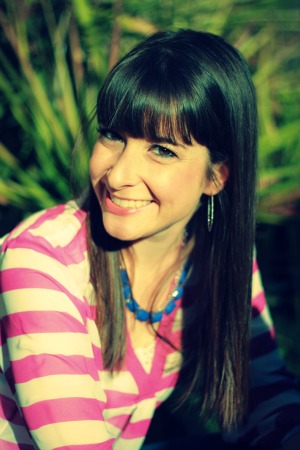
 

Your Super Awesome LifeAshley Wilhite is the founder of Your Super Awesome Life, where she coaches 20-something women and helps them figure out what the heck they want to do with their lives + find the confidence and courage to actually go through with it. She is a huge fan of hot pink nail polish, sparkly cupcakes, and only doing what feels good. You can find Ashley and get your free copy of her e-book “The 5 Things That Hold You Back From Living A Life You Love” here.


Want to write a guest post for Witty Title Here? Be sure to check out previous guest bloggers’ posts first, . Wow me with your (thoughtful and grammatically correct) pitch!
The “Lucky” Ones – An interview with comedian and Daily Show producer Jena Friedman

Guys, I’ve got a great interview lined up for you today. I’ve been wanting to feature a comedian in this series for a little while, and I was psyched when today’s interviewee agreed. So let’s get started—meet Jena Friedman.

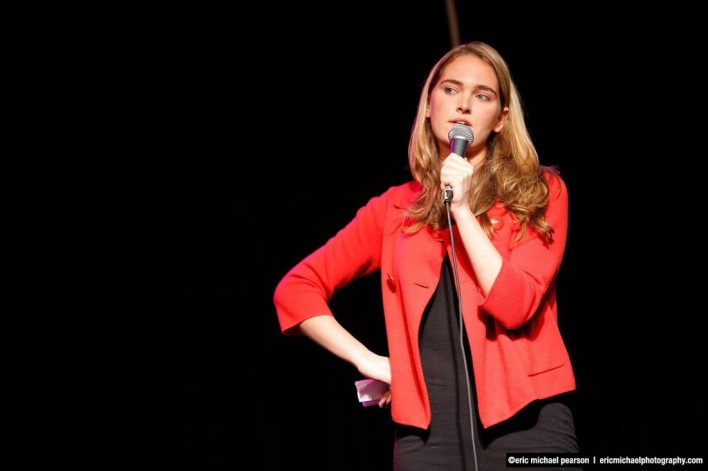
Jena Friedman (Photo by Eric Michael Pearson)

Jena Friedman is a stand-up comedian, actor, writer, and director based in New York. She is currently a field producer at The Daily Show with Jon Stewart and has written for Late Show with David Letterman. As the creator of the viral web series Ted & Gracie and American Girl Dolls parody “Refugee Girls,” Jena has a particular fondness for dark humor. (All the more reason this blogger loves her.)

Before she got her start in comedy, though, Jena studied anthropology at Northwestern University. It was there in Chicago where she inadvertently became interested in improv. Her work has been featured at SXSW, in New York MagazineSalon, Glamour, on Comedy Central, and more.


Ladies and gents, please welcome Jena!

When did you realize you were funny? And how did you decide you’d try to get paid to be funny?

Thanks for thinking I’m funny—I’m still on the fence. As for comedy writing, I decided I’d try to get paid writing comedy because I couldn’t do anything else. I had a few other jobs, like in consulting and copywriting, but my focus always pulled me back to comedy, so I guess when I realized I had no other options is when I knew I had to pursue comedy writing.

Describe your early improv and stand-up experiences. Did you ever have a really embarrassing moment on stage?

Yes, too many. One time I was telling a joke about AIDS (to clarify, in the joke, I wasn’t making fun of AIDS, just my fear of it) and this hipster started heckling me and telling me I shouldn’t make fun of AIDS, so I responded, “How do you know I don’t have it?” and that shut him up and got the whole crowd on my side cheering me on… but only because I made them think I have AIDS just to sell my joke—not my finest moment.

Who were some of your biggest influences (whether that’s family, friends, or other comedians)? 

My dad really influenced my comedy. He’s a doctor, so he’s pretty morbid and clinical, and when I was a child he would buy me really disturbing books (like this comic book called The Big Book of Death in which each chapter explored a different way of dying), and I would just devour them. I also remember seeing Sarah Silverman and Janeane Garofalo when I was younger and thinking I wanted to be like them.

When you landed a job on Letterman, was that the turning point in your career? Tell me about how that felt to make it “big time.”

I was literally three weeks away from moving to L.A. when I got Letterman. It was a great feeling to get that job. I had applied a year earlier and didn’t really think they were still looking for a writer. So when I got the email asking for another submission, I sent it in the next morning and got the job a day later.

I remember meeting Dave on my first day and he said, “This is a shitty place to work, but I guess it looks good on the resume,” and I thought, “Wow, this is the big time.”

There must be incredible pressure to write for a show that airs five days a week. How did you do it?

You just try not to think too much to be honest and just write. Late Show is a machine that’s been running for 30 years, so all the parts are in place and it moves with or without you. So many great comics have gone through there and succeeded and failed, so I actually didn’t feel like if I didn’t make it past the three or six month mark I’d have anything to lose, which definitely helped my creative output.

You often hear how tough it is to be a woman in comedy. Do you think that’s true? Have you dealt with sexism in your business?

Yes, it’s tough. It’s tough for minority men and women as well, and really anyone who’s an outsider, particularly in writer’s rooms and in stand-up clubs. But the good news is that everything is changing, partly because people are more aware of inequality and partly because the internet has made it so voices outside the mainstream can be heard. Even in the seven years that I’ve been doing comedy, the landscape has diversified a lot… this is a long and unfunny conversation, but I’m optimistic.

I’ve dealt with sexism in comedy by wearing really shapeless cardigans—no one hits on a girl in a cardigan.

Which has played the biggest role in your success—luck or persistence?

Persistence, hands down… and not being unlucky.

What are some of your favorite books/films?

I’m a huge fan of Edward Gorey, Roald Dahl, Woody Allen, John Waters, Kathryn Bigelow, Margaret Atwood… if I start naming comedians I won’t stop but the show Summer Heights High by Australian comic Chris Lilley is possibly my all-time favorite, it’s a really long list… I just read Haruki Murakami’s The Wind-Up Bird Chronicle. It was like getting a long, intense hug from an imaginative Japanese man… also, I’m addicted to Breaking Bad.

Describe your role for the Daily Show. What do you love about it? And, I’ve gotta ask… what’s it like working for Jon Stewart?

The Daily Show is really great. The people are some of the most intelligent, talented people I’ve ever worked with and Jon is awesome. I really can’t say enough good things about it.

Any gigs or new projects in the foreseeable future?

I’m doing some shows in D.C. the second weekend of October. I’ll tweet about them when I know more. Otherwise, I’m performing stand-up around New York, about once a week. I tweet those shows as well. Twitter, eek.


Thanks a lot, Jena, for taking the time to chat with me. I’ll be stalking your Twitter for updates. If you enjoyed Jena’s interview, let her know in the comments!

The “Lucky” Ones – an interview with bestselling author and journalist Julian Guthrie

After a long hiatus, I’m excited to finally bring back The “Lucky” Ones series, which—incredibly—began around this time last year. In case you’re new to Witty Title Here, The “Lucky” Ones is an interview series featuring words from creative types who are lucky enough to be doing something they love. Though their backgrounds vary, the interviewees all share one thing in common—hard work. Which is why it actually has very little to do with luck. These interviews shed light on what makes people tick and reveal the story behind each unique individual.

Julian Guthrie

Photo by Chris Hardy

 Julian Guthrie has had the kind of journalism career that most budding writers dream of. A journalist with the San Francisco Chronicle, she’s won several awards, including the Best of the West Award and the Society of Professional Journalists’ Public Service Award. Julian’s writing has even been nominated for the Pulitzer Prize on multiple occasions.

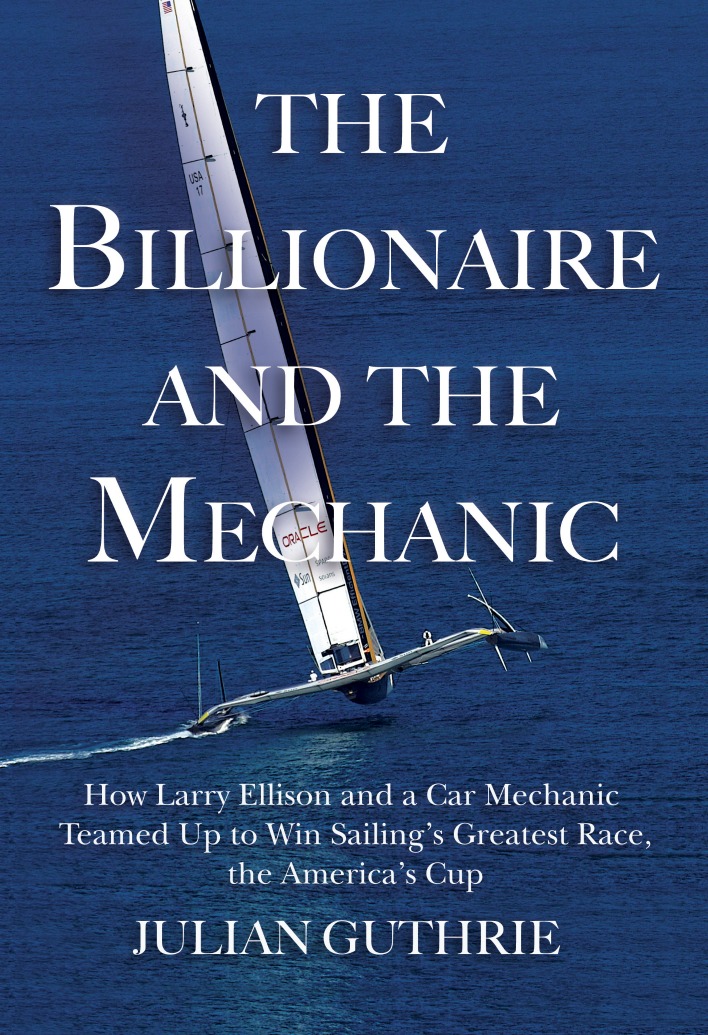
Julian’s more than 15-year career boasts stories published by the Huffington Post, Salon.com, The Wall Street Journal and more. She’s the author of two books—most recently, The Billionaire and the Mechanic: How Larry Ellison and a Car Mechanic Teamed Up to Win Sailing’s Greatest Race, The America’s Cup. The national bestseller was published this summer and tells a story of devastating setbacks, lessons learned, and an unlikely partnership between two men. The book is available on IndieBound and Amazon, and you can follow Julian on Twitter.


Welcome, Julian!

Tell us a bit about your start in journalism. When and how did the bug get you?

I always loved reading, which drew me into writing. I loved journalism because you get to ask any question that comes to mind.

How did you not only gain access to but also earn the trust of an incredibly wealthy man who once refused to speak to the press all together? 

I had a great story to tell, and he saw that. It has lot of different elements to it, from business to sports. Larry loves sailing, and he spent a decade going after the America’s Cup. He lost twice before winning it, so there are a lot of mistakes made and lessons learned. It took a lot to convince Larry to talk with me, but in the end, he saw that this story was a great story, and that it would benefit from his input.

What about the relationship between these two men intrigued you to tell their story? What is it about anyone who motivates you to learn more about them? 

The title says it all: The Billionaire and the Mechanic. I loved the idea of their unlikely partnership, but I also really liked it that they end up having a great deal in common.

I’m interested in ordinary people who do extraordinary things. That’s Norbert [the mechanic]. And I’m interested in how a kid from the south side of Chicago grows up and finds a way to change the business world. That’s Larry [the billionaire].

Billionaire and the Mechanic

Aside from your most recent book’s subjects, which interviewees have been your favorite to profile/feature?

It’s always the one I did last. So in this case, it’s a profile on George Gascon, the district attorney of San Francisco, who has a remarkable story of fleeing Cuba to find a better life in America.

As a San Francisco writer, what edge do you have on getting a good story? How do you think it compares to being a writer in other major cities? 

I’m a journalist with the San Francisco Chronicle, so I’m up on who’s doing really interesting things. And San Francisco is an epicenter of innovation, so that helps.

Journalism is still very much in an awkward place. What is the best piece of advice you could give a fledgling journalist (ahem, me) about navigating the ever-changing territory where pageview journalism is so rampant?

I would say that it’s very important to diversify as a writer. Write fiction, nonfiction, magazine pieces, newspaper pieces, and—to a lesser extent—use Twitter and other social media.

To be a writer, you not only have to be an expert at your craft, but an expert on your topic as well. How do you manage that with deadlines putting on the pressure? And what are some of the coolest things you’ve learned about in your research?

I learn something very cool with every story, which is the beauty of being a journalist. I only operate on deadlines, and they do get easier to manage. Now I can only operate under deadlines.

What are some of the biggest challenges you face in your profession?

Keeping print journalism alive. So much content has gone to the web. I still think there’s great impact to be had in the tangible written word.

You’ve been on the receiving end of a lot of praise and accolades. What would be the ultimate milestone of success for you?

I have achieved success and accolades, which is fantastic. I love being a writer. Now, though, I’m most interested in just finding incredible stories to tell, stories that are original and have themes that transcend place and time.


Julian, thanks so much for your thoughtful responses. They’re inspiring, to say the least, as someone who’s forging her own path in the world of journalism. If you enjoyed Julian’s interview, let her know in the comments!

The “Lucky” Ones – An interview with world-traveling New York Times Bestselling author Chris Guillebeau

How do I write an introduction for my next interviewee that expresses my unabashed excitement while maintaining a sense of dignified professionalism? No really, I’m asking. Because Chris Guillebeau is kind of a big deal in the world of blogging and publishing, and I’m beyond psyched that he agreed to answer a few questions for me. Read on to learn more about the non-conformist with the fully stamped passport.

Anguilla. Angola. Djibouti and Nauru. Recognize these names? They’re just a few of the countries The Art of Non-Conformity blogger Chris Guillebeau has checked off his list. In fact, Chris has visited every country—all 193 United Nations member states—in the world. He recently reached the end of the world (Norway, in his case) just in time to celebrate his 35th birthday. You could say he’s well traveled.

Chris is also well accomplished, but he got off to a rocky start. A high school dropout, he learned how to drive by stealing cars and spent his first job as a dishwasher throwing away the pots that were too difficult to clean. His rebellion would eventually be used for good, however. Now, Chris is a New York Times Bestselling author of The $100 Startup, a book on entrepreneurship that shows how you can make a living doing what you love for a small investment (and it profiles 1,500 people who did exactly that with success). Chris is also the author of the book based on his blog as well as multiple manifestos, and his writing has appeared in Huffington PostBusinessWeek, and USA Today. Despite all the success and reaching his goal of visiting every country in the world, one gets the impression that Chris is just getting started.

And on that exciting note—welcome, Chris!

You’ve inspired and influenced a lot of people with your unconventional lifestyle. Who are some of the people that inspired and influenced you?

I was originally inspired by a surgeon in California who left home to volunteer his services in West Africa for more than twenty years. These days, I’m inspired by many of the people in the AONC community who are all pursuing big dreams and crazy projects of their own. I host a lot of meetups and events around the world, and always go away feeling motivated to improve my work in response to what other people are doing.

The concept behind The $100 Startup is that anyone with the desire, skills, and $100 can create freedom through entrepreneurship. But, if it’s that simple, why aren’t more people out there chasing their fantasies?

There are actually a lot of people out there doing it. Working on one’s own used to be very unusual, but now it’s slowly becoming mainstream—or if not totally mainstream, at least not that abnormal.

Visiting numerous countries, did you always manage to immerse yourself into the local culture, or were there times when you felt like a perpetual tourist?

It’s more of a third-culture thing. I couldn’t say with integrity that I “immerse myself into the local culture” wherever I go, but I’m also not a tourist. Instead it’s more of its own sense of identity, perhaps that of a modern nomad or wanderer.

Is your idea of home, then, different from others’? Is it difficult to establish roots, or is home wherever you are?

I have a home in Portland, Oregon, and I travel the world about half of the time. I feel at home in Portland and in any number of other cities. Whenever I’m home for a while without traveling, I miss the road. After I’ve been on the road for a while, I miss life in Portland. It’s not one or the other.

Which has played a bigger role in your success—luck or persistence? And what’s your response to people who tell you how “lucky” you are to travel the world?

Both. Perhaps you could say that luck favors the persistent.

As for being “lucky” to travel, that’s another story. There are plenty of people in the world who aren’t able to travel, but most of the people who would say something like that aren’t among them. I’m able to travel because I’ve made choices that support that lifestyle.

When you’re your own boss, downtime can be hard to come by. How can entrepreneurs and self-starters avoid burnout?

You don’t burn out by working too much, you burn out by doing things you don’t want to do. I always think it’s dangerous in the long-term to continue to push yourself when you’re unmotivated. But when you’re eager and excited to do something, why would you burn out?

You stress the importance of helping others. Why is that so essential to personal growth? Is it all about karma, or something more?

It’s generally a good idea to be a nice person, but it’s not just about karma. I like the concept of “selfish generosity,” where we ourselves benefit as we seek to engage and contribute. Most of us want to be part of something bigger than ourselves. We can find that fulfilment through helping others.

Now that you’ve accomplished your goal of visiting every country in the world, do you have other big goals or plans in the works you can hint at?

Yep! First, just because I’m done visiting every country doesn’t mean I’m finished with travel. I love being on the road and have no plans of stopping—I hope to continue writing and traveling for many years to come. Right now I’m working on a new book about the nature of quests, not only my own but those of other people who have chosen to orient their lives around a big journey or lifelong pursuit.

Besides your own, what are some of your favorite books?

I mostly read fiction. Murakami is my favorite author, so I’ll pick A Wild Sheep Chase by him, A Prayer for Owen Meany by John Irving, and Girlfriend in a Coma by Douglas Coupland.


Chris, thank you so, so much for taking the time out of your schedule (which is packed, no doubt) to chat with me. It was a pleasure getting to know more about you, and I can’t wait to see what you do next. Have questions, comments, or general exclamations of giddiness (I know I do!) for Chris? Leave them in the comments!

The art of asking for help with Amanda Palmer

Last month, I shared the wise words of musician/writer Patti Smith, whose advice to young artists was to keep a good name and do your work because you love it (but also not to denounce success when your or others’ work reaches beyond the “cool” crowd).

Musician Amanda Palmer (with success both solo and with the band The Dresden Dolls) offers similarly thoughtful yet simple advice in her TED Talk below, which is to ask for help when you need it. Why? “You don’t get what you deserve. You get what you ask for.”

This is controversial advice coming from someone who’s been on the receiving end of a lot of criticism for this very thing. Last year, Amanda’s Kickstarter campaign requesting $100,000 to fund her album/tour became Kickstarter’s most successful ever after receiving $1.2 million. (So yeah, if you’ve never heard of her, the lady with the eyebrows has a lot of loyal fans.) So when Amanda later put out a request for local musicians to play onstage in exchange for beer and hugs, not cash, some people got pissed.

This is no longer news (and it’s not the focus of this post), but it provides a little back story for the above video. Is Amanda in the wrong here? Is she hurting or exploiting her fellow musicians and fans? And why does everybody hate Amanda Palmer so much?

Well, actually, not everybody does. The Kickstarter campaign funders, for example, are obviously touched by what Amanda offers them in return for their money. And as Amanda points out, their contributions are voluntary, sparked simply by their desire to give support to a musician whom they love when she asks for it. Another takeaway from her TED Talk: “Don’t make people pay for music… let them.”

A personal note: When John and I move to California in July, we’ll be asking for a lot of help. Luckily, we have supportive families here and friends there that we can go to when we need it. Like Ms. Palmer, I will not apologize for asking, but I will thank my helpers profusely and hopefully pay them back (or pay it forward) in some meaningful way. I also won’t hold a grudge against anyone who can’t or doesn’t want to help us. This is our move, and no one is obligated to support us. But it sure will be nice (and appreciated) if and when they do.

Controversy aside, Amanda admits it is a difficult and vulnerable thing to ask for help. It puts you in a position where others may laugh, say no, or worse, ignore you. But it also puts others in a position to do good and feel good, in which case you both benefit from the interaction. It’s not weak to ask for help. It’s brave. And I applaud Amanda Palmer for making it seem just a little less daunting. Between that and her badass music, I’ve got a total girl crush.