The “Lucky” Ones – An interview with personal finance whiz Sarah Greesonbach

Time for another edition of The “Lucky” Ones series, and you know what that means—it’s almost-but-not-quite the weekend! Last night was the Mobbies awards, and I had an awesome time meeting fellow bloggers and attempting to identify them based on my memory of their Twitter pictures. I also maaaaybe have good news to report back (spoiler alert: I WON!!), but I’ll save it for the recap that will come this weekend. Right now, I’ve got an excellent interview lined up. Meet personal finance blogger Sarah Greesonbach!
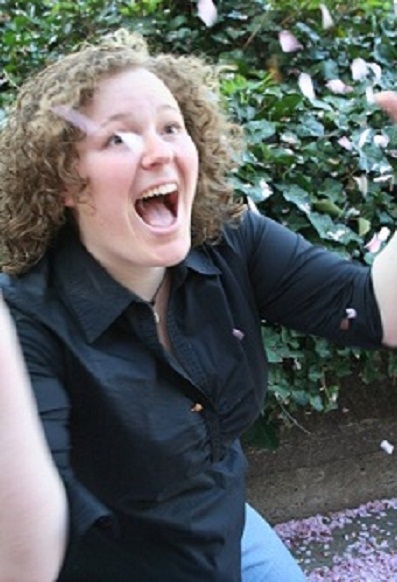
It should be noted that Sarah Greesonbach isn’t just a personal finance blogger. She also writes about life, love, careers, and design, among other things. But it’s her passion for smart money managing that sets her apart. Whether doling out advice on surviving unemployment or drinking on the cheap at Starbucks, Sarah’s expert tips make even the most adverse-to-budgeting willing to reconsider the daily to-go latte.

Before blogging, Sarah was an English teacher, and she’s currently pursuing ventures in young adult fiction. By day, she works as a quality of life support liaison for military families and finds just enough spare time in her busy schedule to read, exercise, and experiment with slow-cooking. 


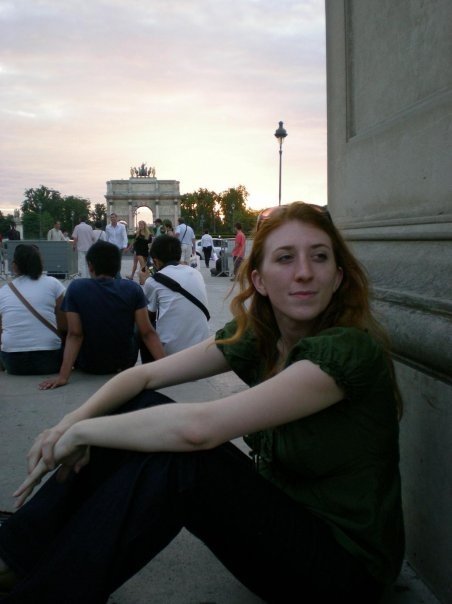
And here she is!

Finance can be a very unsexy topic. How did your finance blogging get its start, and how do you keep the content fresh and relatable?

This is tricky, because some would argue that there’s no way for personal finance to be fresh and relatable because the basics are so basic: spend less, earn more. And the numbers involved could keep things pretty dry. But that’s kind of like saying we should stop talking about health because we all know about exercising and eating right. That doesn’t make it any easier!

I got started because I found myself with a lot of opinions and questions and I needed an outlet for it. There are so many permutations and perspectives of life and finance because everything is new the first time you experience it for yourself. So while I could read a book about a person clawing their way out of debt, I could also read a blog about it and write one of my own and all three would be original stories.

What keeps my content fresh and hopefully relatable is the attempt share my own personal story of debt, career, and relationships to make sure I’m not making any stupid mistakes.

Would you mind sharing some of your own financial ups and downs? How did they affect you on a more personal level?

I have been very, very lucky to have not felt the consequence of most of my bad decisions. I have a student loan and a car loan that I wish I had put more thought into, but I have also had gainful employment to pay for these things without severe financial discomfort.

The ups and downs (and the personal realizations) have been more about realizing the freedom I am missing out on by having these loans. For example, did you know that if you don’t have expenses you don’t need to earn an income? Like… if you had no car loan, student loan, rent bill, or property to insure, you could literally travel the world and freelance on a comparatively tiny sum of money? My college self did not know that, and so my late-20s self cannot do that. A good lesson to learn. If you want any kind of freedom, pay attention to your money.

Have you had to make any sacrifices along the way? Why is it important for anyone to be willing to do so?

I struggle with some serious workaholic/OCD problems, so if anything the only thing that feels like a sacrifice is to not be working, cleaning, or doing something productive. In that sense, I have made sacrifices in limiting the amount of work to do for my health. To stop working, put down the computer and relax and destress is something I struggle with (and fail with) daily, but I am getting better about it.

Apparently human beings were made to enjoy being alive, not work themselves to death. Who knew? And it stinks but it is so important to reach that breaking point where you find out what is too much — it helps you to realign your priorities and make sure you are working on the things that matter. For example: a perfectly-in-order bathroom and clean laundry? Not more important than spooning my husband.
Is achieving financial stability a matter of trial and error, or are there any fail-proof ways to lead a comfortable life?

I would like to think that the whole of society is accruing more and more information every century and that that information will be effectively organized and stored and lead to never making mistakes ever again…but yeah, that’s not happening. So it will always be a slightly educated trial and error. But the trick is that you can decide to be comfortable in the face of trial and error, it is a matter of what Rainer Maria Rilke says about “loving the unresolved question itself”. Because if you can be happy while you’re trying to figure things out, figuring things out will be the icing on the cake.

What are some of the most common indulgences you see other people buy into?

Stuff. Just stuff. We downgraded from a 4-bedroom house to a 2-bedroom apartment and I can’t even remember all the crap we used to own that we now make do without. I’m sure when we have kids we’ll need more, but it’s so refreshing to go home and just see things I need or want — no wondering where to put something or moving things to get to another thing. It also saves us money to not be constantly shopping for things to cover our home space with. Our decor isn’t utilitarian, by any stretch, but we’re slowly swapping out the unnecessities for necessities and really enjoying the process. It also takes me about two hours to do all of our laundry with a half-size washing machine. That makes me very happy.

What’s the best thing a young professional new to the working world can do for themselves in terms of money and establishing independence?

I failed financially for a long time because my goals were so unspecific. Even though I heard the “save, save, save” motto from my parents and friends, it never seemed real to me so I never really saved. But there are two quick ways to start caring a lot about money:

1 – Add up how much you have made in the past 3 years and compare it to your savings account. For example, as a teacher I made a little over a 100G in 2-3 years. It’s easy to think about blowing $50 on dinner or a few hundred on groceries, but when you look back on three years and say one hundred thousand dollars passed through my hands, and I have nothing to show for it, finances get really real really quickly.

2 – Set your first starter-goal to save up two pay checks. This is such a huge freedom-thing. No one should feel trapped in a job or so stressed about being fired or laid off that they have stress dreams. Find the number it would take for you and your spouse to leisurely job hunt for a month and save that amount. The day that we officially saved enough money to cover one paycheck was very emotional for me. The thought that I could get fired or laid off and — while it would suck and be stressful — we would literally be able to pay our bills and have food for a few weeks was an incredible feeling (and seems so simple and obvious now!).
You also blog on a number of other topics, like careers, relationships, and design. Explain your passion for these and how they all tie in together in your life and blog.

My guiding light has always been the hope that someone else out there has the same questions I have. Why some things are so easy for other people but so hard for me, or vice versa. So when it comes to ideas for writing, it’s a matter of what’s been on my mind lately – making friends and being a friend, having a successful career and choosing a professional direction, and then sometimes just struggles with blog design and social media. Even though these are random bits of life, the thing they have in common is me experiencing them and wondering about them.

How do you stay motivated to keep writing constantly on top of a demanding day job?

I am motivated by my desire to create meaningful and useful work.

After college, I went through a very long dry spell of putting everything I have into my career, leaving very little for myself or anything creative. So when my career as a teacher turned out to be toxic for me, it was a huge let down and I struggled for a long time to get back to feeling like myself.

Writing has been the only constant for me. When things were good or when things were bad, in the back of my mind I could hear all the professors and supportive people I’ve known saying write, write, write. And it’s true. A crappy poem or an illogical paragraph is embarrassing, but it’s something you have created and put into the world. Not to get all High Fidelity on you, but deciding to have a voice and be a part of the creative output is something I am very proud of and that I try to remind myself of daily. Now, hopefully after a while it will be good stuff you’re putting out. But even if it’s not, at the end of your work day you can look back and say I birthed that and it is mine. 

So, when I get home from a long day and a long commute of working for someone else, it’s a life-affirming and energizing practice to put my time into something that is for me and my loved ones. And it is a kind of stress release, too: when I get down about people who are having (what appears to be) crazier adventures than mine or making tons more money, I am able to have a certain amount of pride that I created something and that I am doing something special to me, too.

Describe your path to reaching your dream job. How can others do the same?

You would think it would be as simple as finding out what you like to do and finding a job that matches that description, but I learned the hard way that you won’t like doing anything very long if it is with the wrong people. So, my goal in life is to find my people—where are the people I want to be (and be with) hanging out and interacting? As a teacher, I was doing what I loved (talking about English and explaining things) but the people I was with all day hated English. It broke me down. So I am looking for that perfect combination of words and complementary people.

The best advice that has come my way was over on Brazen Life a few weeks ago where a writer suggested that finding the perfect job is much like finding the perfect spouse. And it makes so much sense — jobs are almost as different as people, so how could you possibly know anything about your dream job until you find it (or create it). So the way to be successful is to find a job that you share interests with and try it out. I think it is very common for the new generation to job hop 3-5 times before finding the right fit.
What do you love most about what you do?

After 28 years of living, all I know about myself is that I like communicating ideas through writing. Sometimes that’s personal finance writing, and sometimes it’s as simple as crafting the perfect (and I mean perfect!) email! So, in my current job I get to do a lot of emailing and coordinating, and that is very satisfying to me.

Are there any books you’d recommend to anyone looking for a way to improve their financial destiny?

How’s this for being cheeky: any book at all. Read instead of going out to dinner. Read instead of going shopping for fun. Read instead of paying $10 on a movie ticket, then talk to your friends about it over tea in your own house. This will improve your spiritual, emotional, and psychological destiny, and the savings will help with your finances, too.


Sarah, you rock! Thanks so much for being a part of The “Lucky” Ones series—you’ve got a great attitude. Like what Sarah has to say? Please let her know in the comments!
The “Lucky” Ones – An interview with businesswoman & empowerment guru Tara Swiger

Anyone who’s ever dreamed of leaving their day job, starting a business, and working from home is going to LOVE today’s interviewee. I met Tara Swiger via the glory of the Internet, and she’s here today to tell us about how she did all of the above.

After you read Tara’s awesome Q&A, please make sure you vote for Witty Title Here in the Mobbies! (Didya already vote? Thanks – you can vote again!)

Now, onto the good stuff!

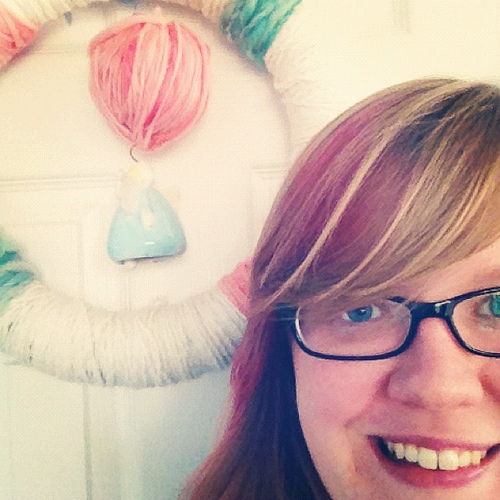
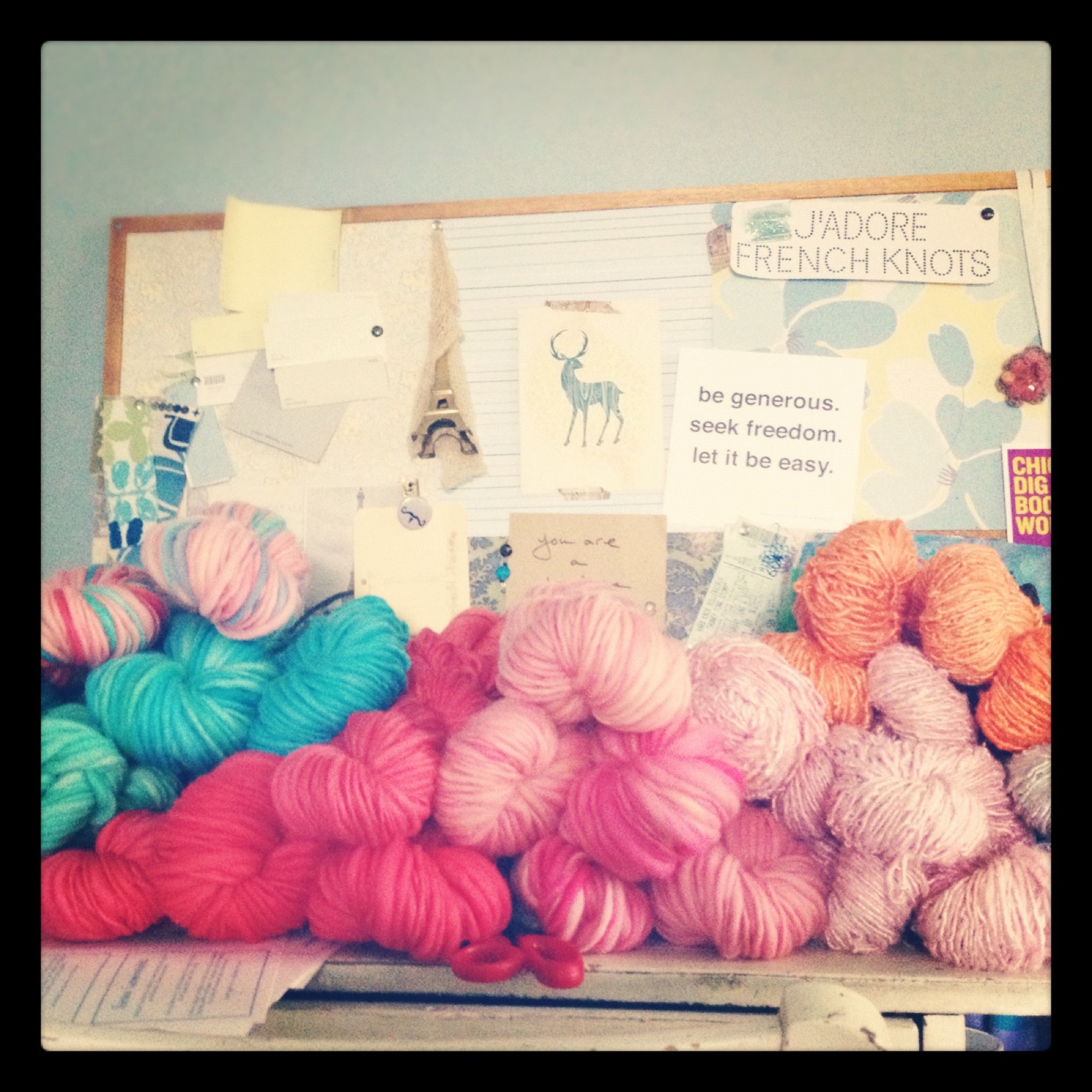
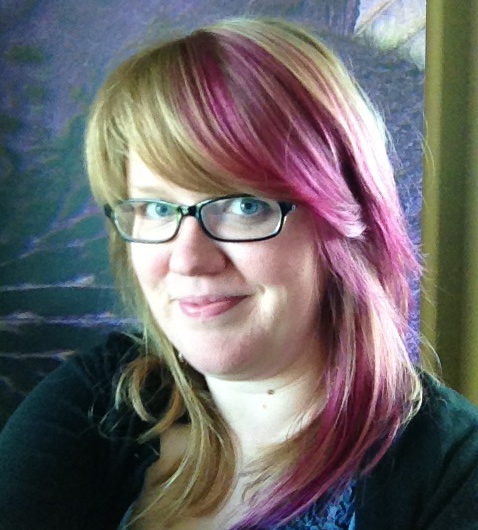
Tara Swiger is the kind of gal whose brain you’d want to pick. A French major turned yarn-maker, the pink-haired professional knows a thing or two about working on your own terms—and successfully. After a series of unsatisfying office jobs, Tara took matters into her own hands, left her job, and went full-time with her business. Curious as to how she made it happen, countless aspiring and struggling entrepreneurs came to Tara for guidance. That’s when she organized the Starship—a yearlong series of classes, goal-setting, and map-making to help members’ crafty businesses take flight. It was such a hit that it led to her first book.
 
Though she spends most of her days talking with and encouraging creative businesspeople, Tara doesn’t work the grind. That means weekends are totally off, along with a weekday here and there. This enviable schedule keeps her energized, and it gives Tara enough time to read 100 books in one year, bake cupcakes once a week, and explore the flavors of veganism.

Read on for some thoughtful insight from Tara!

More and more, it seems women in the blogging world are becoming successful businesspeople by selling their craft or art online. What do you think of this growing trend?

I actually think this trend is the other way around: women have always been making money by selling their art and craft (long before the internet!), but now they’re adapting in the blogging world. There have been people blogging about their craftyness since the very beginnings of blogs (there were already tons of large ones when I found knitting in 2004). But as blogs change, and the way we consume information changes, we have to change the way we approach our blog, especially if you want it to be an effective business tool. As my friend Diane says, blogging started as a personal medium but when you use it as a business tool, you have to think a little differently.

In working with creative businesses, I see a lot of the two extremes: blogs so about-the-person that you don’t have any idea what they sell (or their subject matter isn’t related to what they sell, so they aren’t attracting people who would be buyers), or blogs-so-businessy that it’s a constant pitch-fest. The balance is in finding what you need people to know about your product (in order to make it easy for them to buy) and in what they actually want to read about.

Of course, there are a zillion ways to blog and to have a business, and to mix the two together, and finding the perfect blend for you takes lots of experimenting. (I could go on… I wrote a whole workbook about finding this balance!)

What are some of the success stories you’ve had as a direct result of someone reading your book or becoming part of the Starship? How does it feel knowing you helped fuel that success?

Ooh, I’ve just started collecting these and they make me so so happy. The newest one is Ana, a yarn-maker and knitter who joined the Starship three months ago and has already reached her income goal. When she joined she said the goal felt completely vague and distant, but we helped her make a map and then she stayed accountable in the weekly chats…and in September she was there, at that big, unreachable goal! Now she’s so busy with orders we’re working on scaling up, and making sure she can keep in touch with the holiday orders when the season slows down in January and February.

I can’t even express how thrilled I am to watch other people define their own success and reach it. When I hear their “yays” (we have a weekly “yay time”), I just know I’m doing the exact right thing, even if I can’t explain it to my in-laws. 🙂

Has there been any trial and error with your own business? What methods did you attempt that fell flat or didn’t work out the way you thought they would?

Everything! I am constantly trying and error-ing! I don’t know that any method or tool has fallen flat all on its own, it’s always a combination of implementation, audience and timing. Usually, things don’t work as quickly as I think they will. If I give up on something after a few weeks, I don’t see any results (this includes everything from a new product to a new marketing channel to a new supplier). Giving something time, and then course correcting in little ways, can make just about anything work. The question is: Do I want it to work? Do I enjoy it? Is it worth the error time? For some things, yes! But for the things that are meh, I try to non-guiltily let them go.

Was it empowering leaving your former job? Describe how you felt in cubicle land and the decision-making process you went through to take that step to leave it behind.

Yes, it’s so very empowering to work for myself. The actual leaving-of-my-job was much more conflicted. I was miserable at my job, and I had been working on my yarn company for three years with the express intent of working for myself. So when the time came, it was as scary as trusting that your biggest dream really can come true.

But how it actually happened is more boring than all that. I set a goal for what I’d need to earn on a regular basis (super specifically, how much each week for how many weeks?), the number of wholesale accounts, and the amount of bills I’d pay off. And then my employer was going to lay off a big percentage of the workforce and offered a buyout. I had reached all my goals, so I applied for the buyout (instead of losing my job!) and… that was that. I was thrilled, but terrified.

Unfortunately, you dealt with a negative response from your coworkers when you announced you’d be leaving. Why do you suspect they wouldn’t talk to you? Were they jealous?

I think that they took my leaving personally, as if it reflected on the value of their own jobs. My bosses were completely sweet and kind, but it was all the other women who had my same title (basically: secretary) [who] seemed to believe that if I wanted something different (and better for me), they should too. I never was suited for office life (and black slacks every day), so I was surprised that they took it so hard.

What basics do your book and classes outline to ensure stamina and growth for fledgling business owners?

There are a few basic principles underlining everything I do:

.
  1. I write, talk and teach about discovering the wonders in your business. I’m not interested in finding the “right” way – only the way that’s right for you, your goals and your people. Your biz, no matter how new or old, is an entire world, filled with a culture, a people (your buyers), and adventures. Although there are some business basics that we all use, you get to use it in your own way, to build your own kind of business, exactly as you want it. Exploring your business means doing experiments to see what will work (and what won’t). There aren’t easy answers, only exciting adventures. (So everything, from the book to the classes is FILLED with apply-it-to-yourself worksheets.)
  2. One-size-fits-all doesn’t fit anyone. Experimentation is key. The business you want is different from the business I want. And that means that we each have to find our own way. Business takes time, and you’re not going to get everything right the first time (or you won’t know if you will right away, it takes time!). So you’ve got to be willing to try again and again. The Starship and classes provide support for this experimentation (along with ideas for other things to try, and ways to measure if it worked or not).
  3. Finding your own way can be lonely, so we do it together. Gentle accountability and realistic goal-setting (followed by do-able to-dos) are in every class, and a weekly part of the Starship.
  4. Comparison sucks. Compassion (especially for yourself) rules. Looking at what someone else has and trying to recreate it only leads to unhappiness, and it blocks you from seeing the amazingness that you really want, and the biz you can build. This is a hard thing to remember, so we talk about what that feels like, a lot.

Is your work rewarding? What do you love about it?

LOVE LOVE LOVE it! Really! My best days are the ones where I’m connecting – whether through teaching via video, or answering a question via email or meeting someone for a cup of coffee. That said, I’m an introvert, and I need lots and lots of quiet time to think and write and synthesize what I’m learning into something useful. I love that I can get a mix of both (and that I’m responsible for getting both!).

Does it ever become hard to support yourself financially, or have you ever felt like you were running out of steam?

Yes. Honestly, it’s hard every day! There is stuff I don’t want to do (bookkeeping!) and stuff that’s discouraging (just a few months ago my steady income was cut by more than 60%, when a long-time client had a budget crisis and another client finished the project we’d be working on, much earlier than expected). But that’s the risk. And as long as I keep looking forward, and coming up with new ideas, and thinking about what my people need and want, it works out.

To keep from running out of steam, I take WAY more time off than anyone I know! I’m offline (except for Instagram, but that’s just to take my photos!) all weekend, and I take a short day on either Thursday or Friday. And sometimes I take a whole weekday off, just to go out of town and see a friend and her new baby.

But because of my experiments, I know my business is better when I do! Every Monday, and every day after a short day, I just kill my to-do list. I’m inspired to write my best stuff. I’m more helpful and friendly and, well, smart!

How do you envision your own business growing? Could you ever see yourself switching it up entirely down the road?

I dream about switching it up all the time. Sometimes I think I’ll write another book, other times I think I’ll stop talking about business-y help altogether and just make stuff and sell it in a new tiny Etsy shop.

But then I get an email from a Starship captain that just made more last month than ever before… and I know I’m doing the exact right thing for right now.

Have you made a lot of friends and connections through your work?

Absolutely! Everything from co-teachers to collaborators to students and readers. I love ’em all!

Where does your book leave off its readers? Feeling challenged, empowered, a little bit of both?

At the end of the book, you’ll have a clear idea of what you offer (and what’s unique about that), who you’re selling it to, and how to reach them. And you’ll have a marketing plan so you actually do all the long-term connecting and communication involved in building healthy relationships with your people!

What are some books (other than your own, of course) that you would recommend to blossoming business owners?

I always recommend Kari Chapin‘s books. If you don’t know anything about how you’d start selling your handmade goods, check out Handmade Marketplace. And if you’re just starting your store, check out her new book, Grow your Handmade Business. Whereas my book is for the already-selling maker who wants to reach more people, Kari’s books tell you all the technical stuff about setting up your shop for the first time.

I love Boss of You. It’s the book that helped me most when I was transitioning from selling a little to selling a lot – all the inside stuff of the business, the admin and day-to-day stuff.


Thanks so much for chatting with me, Tara! You have such an inspiring story. Have any questions for Tara, or didya just like what she had to say? Let her know in the comments!

The “Lucky” Ones – An interview with L.A. theatre guru Joanna Syiek

After last night’s birthday celebration, I’m in slight hangover mode. Not from the wine, though there was plenty of that. It was the four pizzas that put me in a coma. Luckily, I’ve got a great interview lined up for today so I can catch up on my sleeps. (I require more rest in my older age, after all.) Meet the lovely, intelligent, theatric Joanna Syiek!

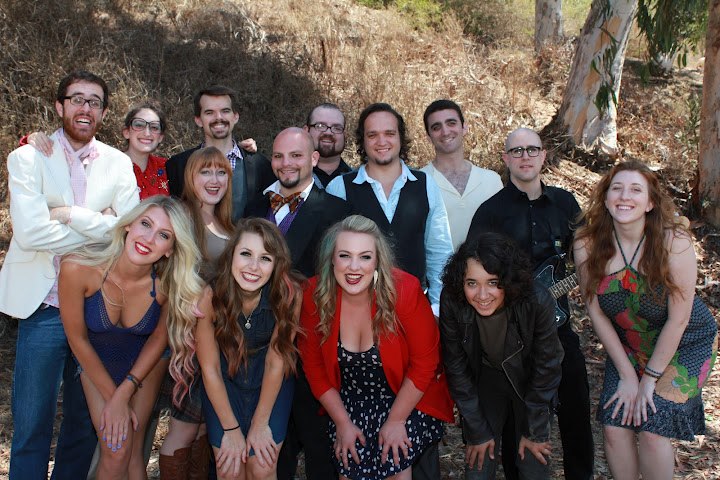
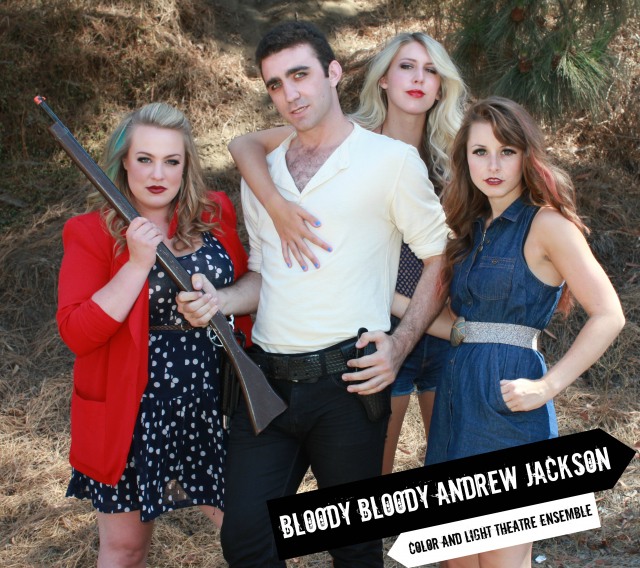
Though she grew up on the East Coast, Joanna Syiek has established deep roots out west. In 2009, she founded the Color and Light Theatre Ensemble, a theatre initiative based in L.A., while simultaneously working toward her degree in Global Studies at UCLA. The self-proclaimed music junkie directs the troupe in performances throughout Southern California and writes for the troupe’s blog. (Editor’s note: Recommended posts here and here.)

Both passionate and wise, Joanna believe in the power of performance and the beauty of life’s idiosyncrasies. Some of Joanna’s other interest include yoga, rollercoasters, and Indian food. The next thrill-seeking adventure on her list? Skydiving.

Welcome, Joanna!

I’m immediately intrigued by anyone who grew up on one coast and moved to another. What’s the story behind your big move?

I spent most of my childhood in Massachusetts, so I have some pretty hardcore nostalgia around this time of year when the East Coast starts getting its seasons. My family and I moved when I was in my pre-teens to sunny California because my father was starting a new business opportunity out on the West Coast. I remember being thrilled with the idea of a big change and spending my first few months marveling over the fact that I could go swimming outside in November without freezing to death. Nowadays, my tolerance for weather has diminished, sadly, and I have trouble braving the cold like I once could. But turns out that SoCal is fantastic, so I’m happy I have both extremes under my belt now.

What led you to found Color and Light Theatre Ensemble? Who did you collaborate with to make it a reality?

Theatre had always been a big part of my life growing up, so it seemed like a natural extension of my interests to found a group with which we could produce shows that illuminated something unspoken about daily life. I enjoy the escape of theatre, yes; but I think what I find most interesting about the medium is that it holds up a mirror to who we are and wish to be. It allows you to sink below the surface of the everyday and ask the questions that many of us get too busy to ask. Theatre wills us to be patient, to be engaged, to explore. A few of my best friends share a similar love of theatre-making, and it was with them that we set off on the first season of shows back in 2009.

 The L.A. theatre scene must be filled to the brim with talent. What’s it like? Competitive, opportunities abound, nurturing?

You’re absolutely right about Los Angeles being a talent hub. And it has such a rich network of theatres big and small doing wonderful work. I think the scene here is, like most things in life, what you make of it.

If you want to view it as a difficult, competitive place to make art, you can. Or you can recognize that there is literally a theatre every mile or so offering opportunity after opportunity to create, take part in, or witness a good show. That said, it requires hard work to make theatre in L.A.

 What kind of productions does C&L put on, and in what sort of venues?

Yes, we have done shows in and around the Los Angeles area (in a fashion that would make commedia troupes of olden days proud). As for the type of productions, we have done mostly musicals or musical plays. My training was in the musical realm so I am drawn to these types of pieces, but future productions may include a spread of things. We tend to do shows that challenge the audience a bit, whether by asking them to consider the ways in which they live their lives or by confronting them with the alternative theatre devices of the piece. The spaces we perform in are typically in black box theatres or smaller theatres, but we also did one show in a converted space (mainly because I love the challenge of non-traditional spaces).

 Who makes up your ensemble, and what do their lives outside of it tend to look like? Is it a tight-knit group?

The group is a mix of full-time creatives, freelance artists, and those that are striking a balance between “real” work and “play.” Some have jobs in the vibrant film industry; others string together fascinating jobs in favor of a less-traditional work day. And yes, the group is a close one. Many of us meet up for adventures or trivia nights when not in the midst of a show.

 What does L.A. offer a troupe like yours that other cities just don’t?

Free dessert with the purchase of one entrée. I kid.

It offers a great web of theatres and alternative spaces that make for intriguing performance spaces. I’ve seen groups turn bars, churches, seaside villas, and outdoor areas into theatres as appealing as any. It also boasts a hyper-connected, supportive audience base interested in the Los Angeles theatre scene. It has a fast paced vibe with a little something for everyone.

 Do you hope to combine your passions of theatre and international affairs? Or, do you ever consider focusing on a career related to your Global Studies degree?

What an excellent question. I’ve been lucky in that many of the jobs I’ve had over the years had an international component to them giving me the opportunity to put the degree to work. And the dream job looks a little something like living in Europe and bringing international fare to the stages there. I hope to eventually incorporate some foreign fare into the C&L schedule (there are a number of French musicals I’ve fallen in love with and would love to see staged in the U.S.).

 Are there any challenges of running and managing a theatre ensemble (whether they’re logistical or emotional)?

Of course. Whether it’s timing of productions, finding venues, working out contracts, finding time to sleep – challenges pop up here and there. But I think the pH test for being able to tell if you really love something is if you still think every single one of them is worth it. And to me, they have been.

 Do you ever worry about things like funding in a market that is likely very dense where you are?

Again, good question. It is hard when you see many theatres struggling and I do think the arts deserve a lot more funding than they receive in the U.S. But I have always been of the mindset that more money does not always translate into better art. The work we do is nimble and we try not to outstretch our means so we do not force ourselves into the position of worrying about the money factor.

 Personally, what is your favorite aspect of drama and live performance?

The fact that you become part of the piece. Some in Los Angeles bemoan the ephemeral quality of theatre (“blink and you miss it” vs. the “staying power” of film), but I think that is exactly what makes it so exciting. The show is never the same twice and the audience plays a role in the theatre. It is also exhilarating when a live performance transforms an actor into something entirely different merely using stagecraft. The choice makes you think and transports you using just a group of people playing their roles. No CGI, no cleaning things up later—just sweeping action in that moment.

Do you act/perform in your troupe’s performances, or do you work primarily behind the scenes?

Not really. I do a bit of it with other theatre groups in Los Angeles but not with my own. I focus mainly on directing with C&L and that has always been plenty!

 Are there any books you would recommend to anyone who wants to dedicate their life to theatre or acting?

Oh, I fell in love with Kazan on Directing, a holiday gift from this past year that I slowly savored. Finishing the Hat offers wonderful insight into Sondheim’s mind and Peter Brook’s The Empty Space presents a fascinating picture of the state of the theatre world and the kind of productions we should aim to create.

Thanks so much for chatting with me, Joanna! I’d love to catch a show when I make my own move out west. Have a question for Joanna, or just appreciate her spunk? Let her know in the comments!
The “Lucky” Ones – An interview with YA fiction author Suzanne Supplee

The day has come! It’s finally time to kick off The “Lucky” Ones interview series featuring creative types who are both passionate and bold. Confused? Start here. Otherwise, let’s waste no time introducing the first interviewee, author Suzanne Supplee.

Who is she? A little background: Suzanne is the author of three young adult fiction novels—Somebody Everybody Listens To, Artichoke’s Heart, and When Irish Guys Are Smiling. Born in the small town of Columbia, Tennessee, she grew up with a love for writing that eventually manifested itself into landing a book deal with Penguin and getting a blurb from Dolly Parton—but not without a few heartbreaks and setbacks along the way. Before Suzanne became a published author, rejection letters provided plenty of frustration, and several manuscripts ended up permanently in her desk drawer.

 In true hard-working Capricorn fashion, however, Suzanne determinedly continued to write, and her 4:30 a.m. daily writing sessions finally paid off in the form of her author status. Her novels, geared toward teen and pre-teen girls, are both humorous and heartfelt. Her protagonists make you want to be their friend. It makes sense, then, that Suzanne is also a high school Creative Writing teacher—her heart is young.

One last thing: Suzanne is also the mother of three—Flannery, Elsbeth, and me. Yup, this author is my mama, and I got over calling her by her first name for the sake of a good bio. Without further ado, my interview with Suzanne Supplee!


When did you first realize that you wanted to write? How did you come to that realization?

I think I always wanted to write.  Or at the very least, I wanted to be heard.  Anne Lamott, one of my favorite writers, says people write because they were not heard as children, and I think this applied to me then.  I think it still applies to me now at times.  Just the way some people are better in person, I am better in writing.


Who are your favorite authors, both current and classic?

I have a brand new favorite.  Recently, I read Brooklyn by Colm Toibin.  It’s simple and quiet and brilliant.  Just the sort of novel I love.  Of course, my all-time favorite is Flannery O’Connor, and I love Rick Bragg’s essays in Southern Living.  John Irving, Thomas Hardy, Emily Dickinson, Barbara Kingsolver are all fantastic.  I always hate this question because there are too many to name.  Fannie Flagg!  She’s like an old friend, though I’ve never met her.  Ayn Rand and Joan Didion and Anne Tyler and John Updike.  John Updike!  I’m just sick that he’s dead.  And Joyce Carol Oates and Sherman Alexie and Garth Stein.  Sobbed when I read [Stein’s] The Art of Racing in the Rain. This question is exhausting me, so I’ll stop now.

No, wait!  Tessa Hadley and Hemingway and Steinbeck and Rebecca Wells and Elizabeth Strout.


What is it like writing a novel, sending it off, and receiving pages of edits and notes from your editor? Is it ever discouraging or overwhelming? How do you handle it?

It’s like giving birth then putting the infant, along with the placenta, in a Fed Ex box and mailing it to New York.


What motivates you to keep working on your craft during the days when it’s hard to keep going?

I love my characters and I love my setting.  If I don’t love my main character and my setting, I won’t keep writing.  If I didn’t love my family and my house, I wouldn’t come home.  Whatever you’re working on should feel like a good home, a place you want to return to again and again, even if things aren’t always running smoothly there.


What is your view on “writer’s block”?

Go wash your mouth out with soap, young lady.


What is something most people don’t know about writing and publishing young adult fiction?

It’s just as challenging and significant as writing for adults.  Are children any less important than teens?  Are babies less important than toddlers?  No.  The notion that young adult books are somehow inferior to adult books is ridiculous.


You’re also a high school fiction teacher. (Did you know that?!) I’ve told you many times I’d like to be your student. For some reason, though, you never give me any homework. Anyway, how do you inspire your students? How do they inspire you?

I make them work hard.  Most people don’t realize this, but high school students really do like to work hard, and they want to be challenged.  I just treat them like real writers because that’s what they are.  I share with them whatever it is I’m struggling with as a writer.  I try to be kind.  And, truthfully, I’m just as passionate about their work as I am about my own.  I suppose this is what it’s like to be an agent or an editor.


Have you ever faced the fear of failure? How do you deal with it?

I faced it five minutes ago.  I face it every second.  I believe that people who are too confident and sure of themselves are full of shit, phonies.  But like Dory says in Nemo, “just keep swimming.”  Just keep swimming


What is the craziest/weirdest/coolest form of inspiration you’ve had?

Years ago I went to Ireland by myself.  It was the trip of a lifetime.  I remember driving to Galway and stopping at this castle along the way.  I thought to myself, I want to write about this place.  I want to set a book here.  You know what’s crazy?  Some thirteen years later, I did just that.


What is the most rewarding part about writing books? Is it seeing the finished product, or something else?

It’s the work itself.  It’s the feeling you have after a good writing session, the same feeling you get when you’re reading a great book and you don’t want to put it down.  It’s sitting at your desk and typing as fast as you can because you don’t want to lose the idea.  It’s having the characters literally tug you out of bed, sometimes at four in the morning, and you go with them willingly because you like them so much.  It’s making yourself laugh or cry with a scene, maybe both.  It’s finishing a first draft and putting it away for a while then missing it like crazy.  It’s staring at someone you don’t know because they remind you of a character from your novel.  It’s going to a party and wishing you were at your desk writing.


What is it like writing for young girls? What’s your favorite part about meeting your readers?

They’re so young!  I honestly forget that.  I write from the adolescent place inside my own head, and this part of me always felt so grown up, even when I wasn’t.


What can you tell us about your next project?

It’s for boys.  Or, I should say the protagonist is a boy.  Obviously, girls can read it, too.  And there’s another book under contract with Penguin which I won’t talk about just yet.


Recommend a book (or several books!) for writers and aspiring writers.

A Moveable Feast by Ernest Hemingway
Bird by Bird by Anne Lamott
On Writing by Stephen King


Thanks, momma (er, Suzanne) for being my very first interview subject. It’s no wonder I want to write my own novel some day. Check out her website or her Facebook page and say hi! Comments and questions here, of course, are welcome and encouraged.

Passionate? Creative? Interested in being interviewed for The “Lucky” Ones series? .