Should you really “write what you know”?


"Write what you know" is bad advice. Here's what to write instead.

“Write what you know” can be such frustrating advice.

While not totally useless for a writer simply searching for ideas, it’s also unnecessarily limiting. To a young writer especially, “write what you know” can make you think, “Well, I’m only [insert your age here] and haven’t even experienced [arbitrary measure of life’s progress]. How much do I really know?”

On the flip side, being told to “write what you know” often leads one to forget all the truly fascinating, unique-to-them things she or he does know and skip right to the mundane or useless knowledge they have. “But I’m only an expert on extreme procrastination, Instagram filters, the benefits of rescuing vs. adopting and making the perfect grilled cheese,” you might think. “Who wants to read about that?”

What makes this advice most counterintuitive of all is that if you suggested to a journalist that she only writes what she knows, she’d think you were crazy. Journalists write about all kinds of things they know nothing about. Researching completely foreign topics and writing about them with authority is part of the job. Why shouldn’t other writers do the same?

My counter-advice? Write what you don’t know.

You’ll learn a whole lot more, and your writing will be better for it.

In her essay “The Value of Not Understanding Everything,” Grace Paley explains why, as writers, we should go outside our comfort zones:

“As for an inventing writer, I would say something like this: Now, what are some of the things you don’t understand at all?

One of the reasons writers are so much more interested in life than others who just go on living all the time is that what the writer doesn’t understand the first thing about is just what he acts like such a specialist about – and that is life. And the reason he writes is to explain it all to himself, and the less he understands to begin with, the more he probably writes.”

Admittedly, by itself, the advice to write what you don’t know can be just as vague and unhelpful as its counterpart. But fear not! I’ve got a few suggestions to get your creative juices flowing. Ask yourself these questions when you’re stuck in a writing rut:

What angers you? What confuses or scares you?

What have you always wished you knew how to do?

Who do you admire most? How do they spend their days?

What was daily life for your parents like growing up? Your grandparents?

Did you read or hear something recently that left you with more questions than answers? Seek out the answers to those questions.

What would your polar opposite be like? Write a story about them or interview somebody like them. Make them sympathetic.

These are merely jumping-off points, but I find them to be far more helpful and interesting than generic topics or ideas. It’s more exciting to think about all the things you don’t know but could and can if you simply dedicate the time to learning about them.

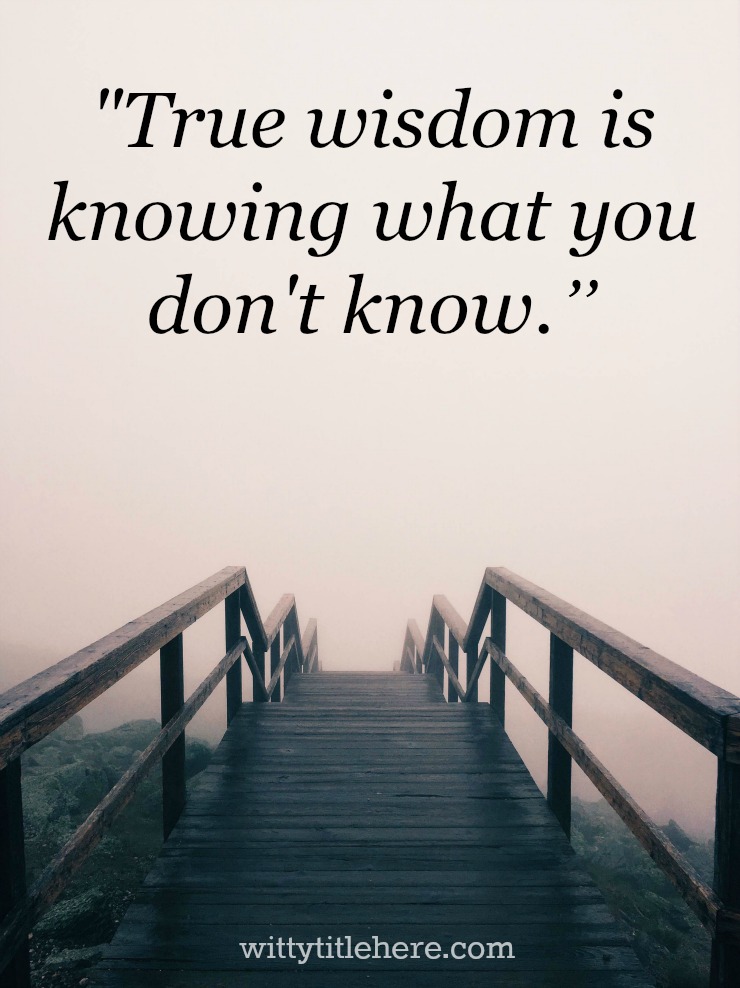
As Confucius said, “True wisdom is knowing what you don’t know.”
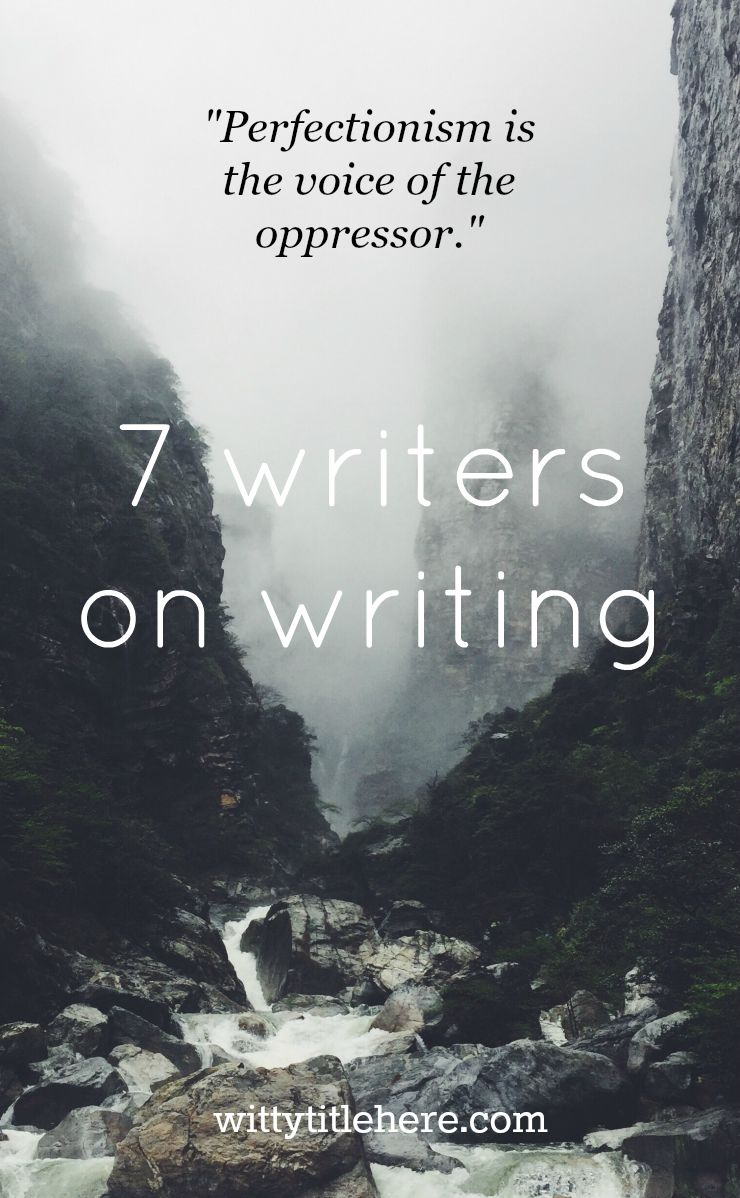
 

Seven writers on writing & perfectionism

7 Writers on Writing

I don’t believe in writer’s block.

do, however, believe perfectionism, fear, inferiority, frustration, distraction and/or existentialism can and often do contribute to a writer not writing. But none of these feelings—nor a resulting lack of productivity—are unique to writers. Why give power to the made-up concept of writer’s block?

As writers, when we’re faced with these feelings of inadequacy, we have two options: give up or power through. The latter always feels better.

These seven writers know all too well what it’s like to be plagued by self-doubt, but they also made it to the other side, and with great success. If you’re dealing with some of these feelings, take comfort in these words of geniuses—then get back to work.


“Perfectionism is the voice of the oppressor, the enemy of the people. It will keep you cramped and insane your whole life, and it is the main obstacle between you and a shitty first draft. I think perfectionism is based on the obsessive belief that if you run carefully enough, hitting each stepping-stone just right, you won’t have to die. The truth is that you will die anyway and that a lot of people who aren’t even looking at their feet are going to do a whole lot better than you, and have a lot more fun while they’re doing it.”

– Anne Lamott, Bird by Bird

“There is neither a proportional relationship, nor an inverse one, between a writer’s estimation of a work in progress and its actual quality. The feeling that the work is magnificent, and the feeling that it is abominable, are both mosquitoes to be repelled, ignored, or killed, but not indulged.”

– Annie Dillard, The Writing Life

“It’s easy to write. You just shouldn’t have standards that inhibit you from writing.”

“Stopping a piece of work just because it’s hard, either emotionally or imaginatively, is a bad idea. Sometimes you have to go on when you don’t feel like it, and sometimes you’re doing good work when it feels like all you’re managing is to shovel shit from a sitting position.”

– Stephen King, On Writing

“One must be pitiless about this matter of ‘mood.’ In a sense, the writing will create the mood. If art is, as I believe it to be, a genuinely transcendental function—a means by which we rise out of limited, parochial states of mind—then it should not matter very much what states of mind or emotion we are in. Generally I’ve found this to be true: I have forced myself to begin writing when I’ve been utterly exhausted, when I’ve felt my soul as thin as a playing card, when nothing has seemed worth enduring for another five minutes . . . and somehow the activity of writing changes everything.”

– Joyce Carol Oates, Paris Review interview

“I believe that the so-called ‘writer’s block’ is a product of some kind of disproportion between your standards and your performance… One should lower his standards until there is no felt threshold to go over in writing. It’s easy to write. You just shouldn’t have standards that inhibit you from writing.”

– William Stafford, Writing the Australian Crawl

“The feeling that the work is magnificent, and the feeling that it is abominable, are both mosquitoes to be repelled, ignored, or killed, but not indulged.”


“You need a certain head on your shoulders to edit a novel, and it’s not the head of a writer in the thick of it, nor the head of a professional editor who’s read it in twelve different versions. It’s the head of a smart stranger who picks it off a bookshelf and begins to read. You need to get the head of that smart stranger somehow. You need to forget you ever wrote that book.”

– Zadie Smith, Changing My Mind: Occasional Essays

“The difference between writers and critics is that in order to function in their trade, writers must live in the world, and critics, to survive in the world, must live in literature. That’s why writers in their own work need have nothing to do with criticism, no matter on what level.”

– Grace Paley, Just As I Thought


What are your favorite writing quotes? What gets you out of a slump?


@wittytitlehere on Twitter

So you want to write an ebook

so you want to write an ebook

If you’re a writer, you’ve likely at least daydreamed about writing a book.

If you’re a blogger, maybe you’ve thought about writing an ebook. Ebooks have gone from being labeled a “cop-out” to the traditional publishing model to a respectable and incredibly popular form of publishing in the span a few years. And for any writer who has useful knowledge, a story to share and—most importantly—a unique perspective on something, it’s a great way to promote your work.

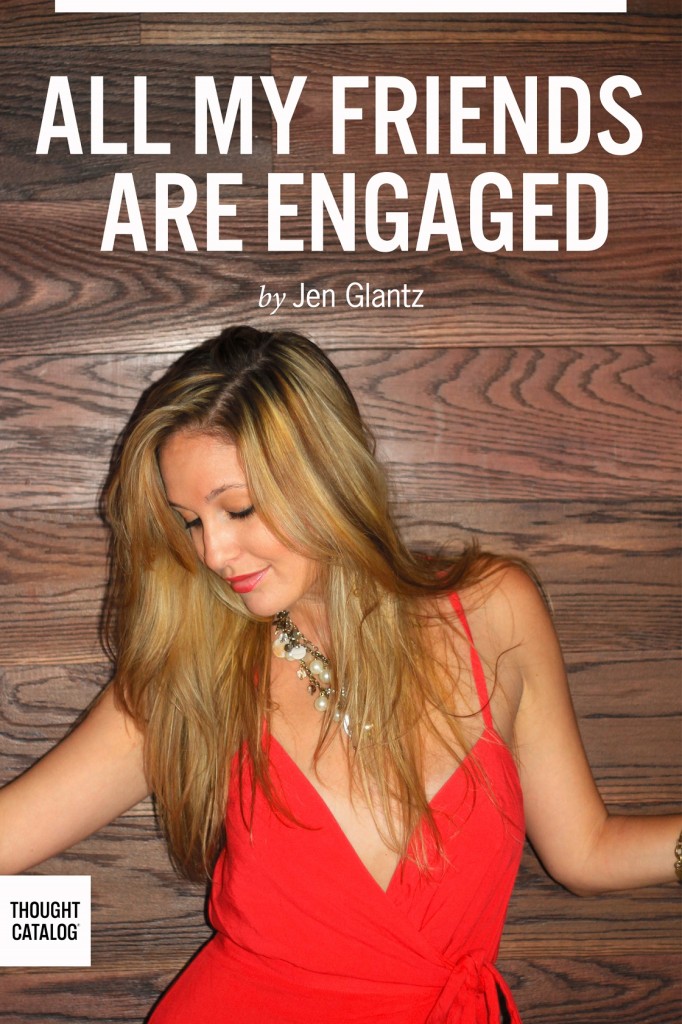
Today, I’m psyched to share the unique perspective of Jen Glantz, the author of the ebook All My Friends Are Engaged. (You can read a sample chapter here.)

All My Friends Are Engaged

Jen’s here to talk about the thought process that goes into deciding to write a book—and then actually writing the thing. Jen was also kind enough to answer a few of my questions, which you’ll find below. Enjoy!


Writing a book, kind of like going on a first date, sounds like such a brilliantly exciting idea. And it is, until moments before it happens.

Moments before you have to start and are sitting there overwhelmed with anxiety, nerves, and not a single idea of how to begin.

Before your pencil hits the paper, or to be more with the times, before you start chomping down on your keyboard to make paragraphs flow into beautifully synced stories, you need to flesh out your idea. It’s best to start with an outline that includes what each chapter will be about and how long you anticipate each chapter to go on for. That way, when you begin writing you won’t be surprised or lost when it comes to how to keep the chapter flowing and when it’s best to end it.

The next step I’d recommend is to challenge your book idea. Take each chapter and ask as many questions as you can about it.

Does it make sense? Does it add to the overall plot of the book? How can I make it stronger?

When publishing an ebook, you have the opportunity to tap into many different modes of social media for marketing and have the potential for many more readers to check you out. That’s why it’s important to make sure the content you’re writing is crisp, unique as it is thoughtful, and worthy of a one-click download.

Write your heart out. But only after you’ve thought it out.

Jen Glantz

CASSIE: Congrats on publishing your ebook! I LOVE the concept and think a lot of twenty- and thirty-somethings can relate to the subject matter. Can you tell me a bit about why you decided to write it?

JEN: Thank you so much, Cassie! I was sick of looking at my Facebook newsfeed and seeing that all my friends were engaged and asking myself why not me? What’s wrong with me? So I figured I’d write a book about some of the more memorable dates I’ve been on. It turns out, what kept this book flowing with such passion was the hope that people who read it would understand that while yes, dating can be awkward, it can also be a whole lot of other things.

What was the most difficult part about creating this ebook? How did you work through it?

It’s a bit intimating pressing the send button after the book is written. Just knowing that (hopefully) a lot of strangers are going to be reading the intimate details of your dating life is a bit overwhelming to digest. In the end, I was proud of what I wrote and wrote it with the intention to relate to others and make them feel okay about their potentially awkward dating life. I pressed the send button and ate a giant cup of ice cream. I felt really good!

I know a lot of bloggers (myself included) aspire to write and publish their own ebooks but struggle knowing where to start. What advice would you give them?

Start now—even if you don’t have a publisher or know how or where you are going to sell it, just start writing. Writing down thousands of words and carefully connecting hundreds of sentences together takes a lot of time, persistence, and motivation. But it’s also really exciting. Even if you have “bad” writing days or you feel stuck in an idea, just don’t give up. Close your computer for an hour, play some good music and dance around or go for a long walk. The ideas will start latching on to you like lint if you just stick with it and keep working very hard.

What has been the best part about becoming a self-published author?

I think to be a successful writer in this day and age you need to be more than just a writer. You need to have a keen sense of social media and the chops to be a PR maven. There are so many different websites and outlets for people to read content on and it’s important that what you write, who you are, and how you market yourself makes you stand out. It’s a humongous accomplishment for me to have this book in the hands of strangers and every time someone reaches out to tell me they’ve read it, I’m just overcome with happiness.

Any other ebooks or projects on the horizon?

I plan on writing many, many more books. My blog is my platform to try out new ideas and new stories for potential books. As a writer you face a lot of rejection and a lot of people telling you no. My future holds a lot of that but it’s okay because I plan to never give up and be so persistent that one day a wonderful publisher will call me up and say, “You know what, Jen Glantz, we will give you that book deal you desperately deserve.”


Jen GlantzJen Glantz is the author of All My Friends Are Engaged, a book of dating disaster stories. She’s the heart behind the website The Things I Learned From and the biggest supporter of the NYC pizza industry. She’d love for you to say hello: @tthingsilearned or .


I know there are a lot of you out there who have written your own ebooks.

What was your experience like? I’d love to hear about it. Share your story in the comments. (And leave a link to your ebook, of course!) If you’re like me and haven’t written one (but want to), what would you write about?