Go play in the dirt

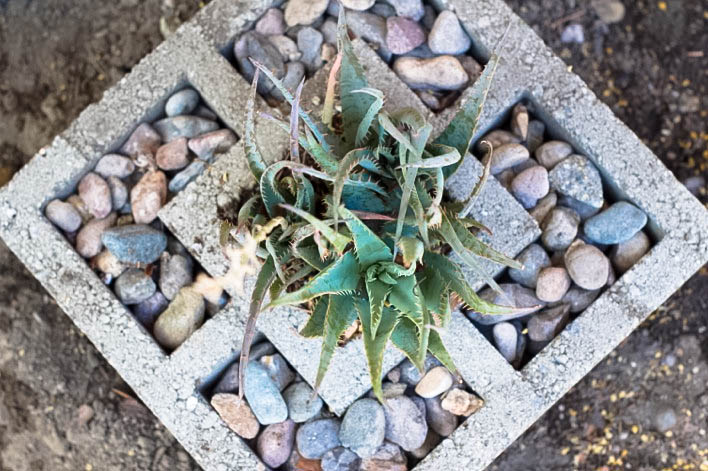
planter

These days, I spend most of my time in front of a computer.

I haven’t added up the hours (I don’t want to know), but most of my week is spent writing for school, writing for work, writing for my blog, reading blogs, procrastinating on Facebook or Twitter, and on and on and on.

To top it all off, our WiFi has a consistently inconsistent pattern of coming in and fading out, causing a few tantrums and meltdowns from yours truly. (It’s not pretty, let me tell you.)

This week, I’d had it. I was sick of the eye fatigue, the hunched shoulders and the guilt of ignoring my actual physical surroundings.

So I went outside and dug in the dirt.
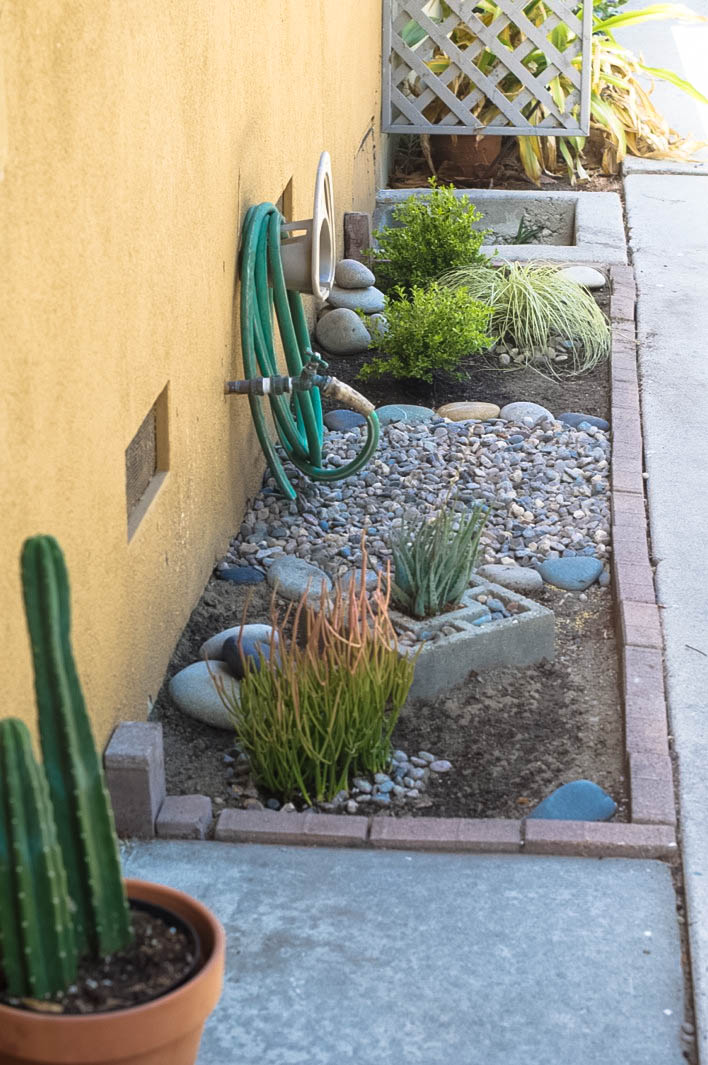
urban garden

Our one-bedroom apartment is small. It doesn’t have a dishwasher, the A/C unit groans from exhaustion and the plumbing is old. But for all its quirks, it’s a pretty sweet spot. And one of its best features? It comes with a 2×11-foot garden.

Actually, it originally came with a 2×11-foot mess of tangled weeds and overgrown succulents, but that all came up easily enough when I first tried my hand at urban gardening months ago. That attempt was noble, though it ultimately fell short. Soon, our garden began to wilt, the weeds grew back in and the flowers I’d planted died.

This week, that all changed. I bought a couple of shrubs, some soil and gardening gloves, sprayed on my sunscreen and got to work.
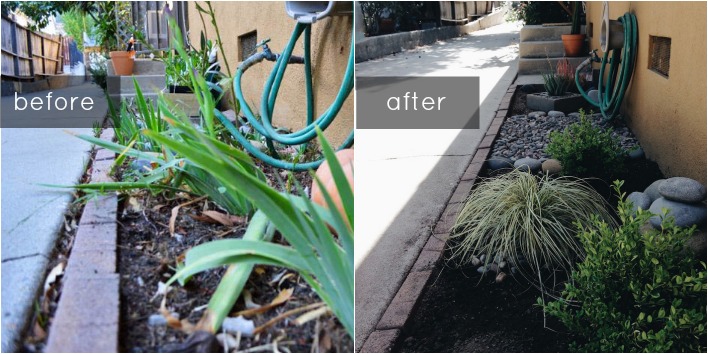
before & after

And you know what? It felt really good. I spent hours digging up all the landscape pebbles we’d spread out and properly weed-proofed the dirt below. I mixed the new soil with the old, dry and dusty soil. And, the most fun of all, I added some greenery.

When we found out our rent was going up at the beginning of the next lease, I momentarily lamented the work we’d put into a place we don’t even own. Why hang things on the wall? Why plant in what’s technically someone else’s garden? But the fact is, like a lot of people in my generation, I may never own a home, but that doesn’t mean I shouldn’t take ownership and pride in wherever I’m living. It’s important to nest, and it’s important to love where you live.
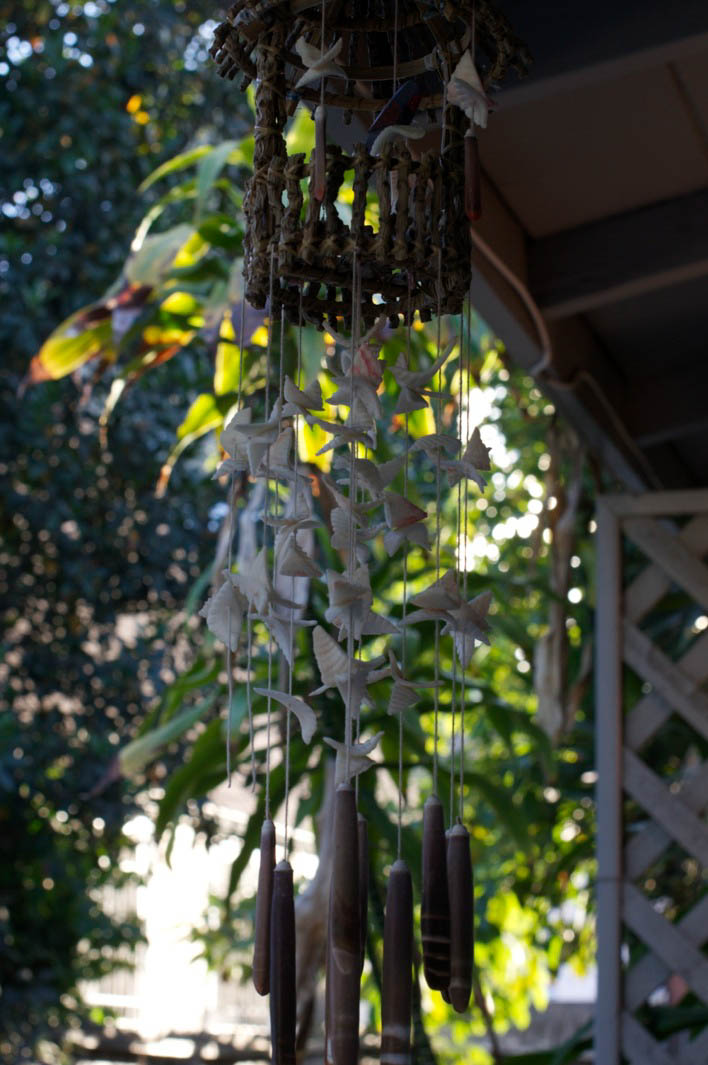
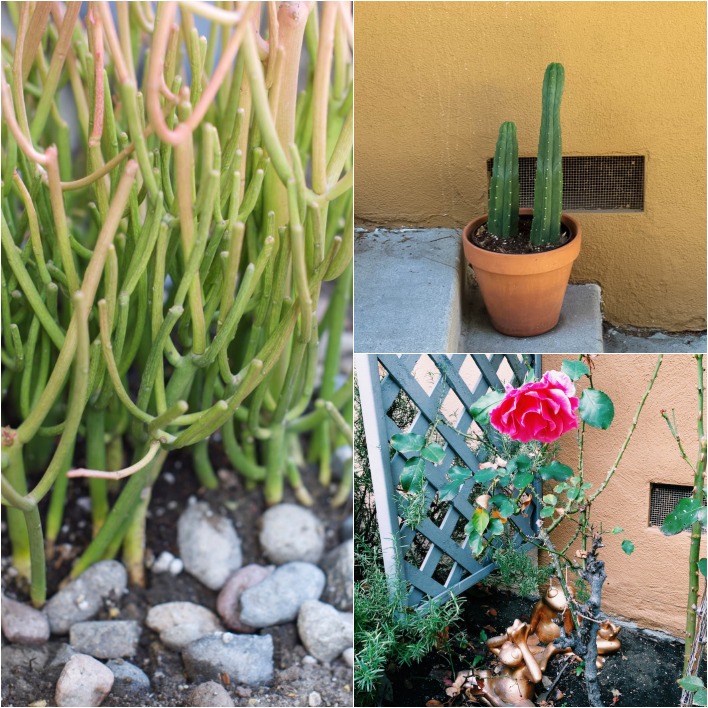
chimes garden

And I do. I love our tiny kitchen where John and I make kickass dinners every night. I love our bedroom with the pretty curtains and my “girly station,” I love our living room with party lights on the wall and funky rugs on the floor. And now, I love our garden.

Now that I have a garden to take care of for real this time, maybe I’ll spend a little less time staring at a screen.

Have you played in the dirt lately?

On creativity, entrepreneurship & fulfillment with Working Self’s Rebecca Fraser-Thill

get to work

There’s nothing like debt to light a fire under your ass.

At least, that’s what has me more motivated than ever to carve out a career that will hopefully sustain me (and then some). But whether it’s student loans or a desire to break free from our uninspired jobs or something else that drives us, we all chase that elusive “dream” job or career—sometimes we just don’t know what that’s supposed to look like and whether it can realistically be done.

Today, I’m talking with Rebecca Fraser-Thill of Working Self about these things and more in the first installment of a two-part career Q&A series. (I’ll have another guest next week!) Rebecca has spent the past several years crafting a life that’s equal parts fulfilling, attainable and sustainable—the trifecta for success, I’d say. And her blog is dedicated to making sure others can do the same. Today, Rebecca has some words of wisdom for those of you who are creatives types and somewhat new to the workforce.

Check out our Q&A below.

Working Self

Briefly tell us your story and how you came to become so laser-focused on what you wanted to pursue for a career.

I became laser-focused by meandering. That may sound paradoxical but it’s completely true. As I was graduating college, I was so afraid of not knowing what I was going to do with my life that I jumped into a PhD program right away. Wrong move. I had no idea why I was there or what I wanted to get out of the experience, so I high-tailed it out of there after receiving my master’s degree – even though the doctorate was Ivy League and fully funded. That’s when meandering took over: I moved to Maine, the state my creative soul had dreamed about since I was a preteen, and stumbled into a one-year gig teaching psychology at a selective liberal arts college there. That one-year position turned into an eleven year stint, to date, including some amazing opportunities related to my passions that are unfolding at this very moment.

I’ve also had the chance to be highly intentional about how much teaching I take on each year, leaving me room to build side hustles and try other avenues out, in addition to caring for my growing family on an “as needed” basis. Throughout my process of leaping in a panic, stepping back and walking away from something “great” that wasn’t great for me, I kept coming back to the same question: how does a person build a fulfilling life? I became so obsessed with that question that I created Working Self, my corner of the web reserved for considering various possible answers. The pursuit of meaningful work has been at the heart of everything I’ve done, and I love having a forum for exploring the “how” with others.

What myths do young people, particularly recent grads, buy into about jobs and careers? Can you dispel them?

While teaching college, I’ve found the most common myth to be the need to find THE career. You know, the one and only career that will provide lifelong fulfillment and joy. Fantasy alert! That simply doesn’t exist. That myth actually spins off a bunch of related myths: that we need to have a multi-year plan in order to succeed; that it’s better to wait for the “right” opportunity than dive into an opportunity you have at hand; that our major sets our path. These are all deterministic, A-causes-B-causes-C ways of thinking, which are not at all not realistic. Thank goodness! Life is so much more dynamic and exciting and keeping-us-on-our-toes than that!

The reality is that a combination of action, reflection, and serendipity carves most people’s career paths. We can’t see how our life is going to unfold as we’re starting out, but when we eventually look back on the years behind us, all the twists and turns make perfect sense. So after graduating you simply need to reflect on what you think you want at this moment based on your strengths and interests, take the leap and start DOING something, and then be alert to serendipity when it comes knocking. Then repeat the process over and over throughout your life. That’s how a career path actually unfolds – which I find to be a lot less daunting (and more thrilling) than the plot-and-plan approach most graduates think they need to take. My story is a case and point, and just one of many.

By the way, I enjoyed tackling this topic in more depth recently on Life After College – and, bonus, Jenny Blake and I offered a free webinar on the topic that is archived here.

Lots of people aspire to be entrepreneurs, but not everybody’s cut out for that kind of bootstrapping work. How can someone who’s uncertain tell if they’re meant to pursue a path of becoming his or her own boss?

I can certainly relate to this question: I’ve finally accepted that I’m not cut out for full-time entrepreneurship, even though I always thought that would be the right path for me. As far back as age 7, I began selling homemade greeting cards to relatives and neighbors! Entrepreneurship sounds great in theory: complete autonomy over scheduling and tasks; no boss to wrestle with; flexible work setting. In reality, though, you have to be someone who can withstand loneliness, work that grows to fill every single crevice of your life, and a lack of financial security.

I found out that full-time entrepreneurship is not right for me by building side hustles, which is the route I suggest everyone take. Side hustling not only allows you to test out your particular idea, develop a client base, and gain confidence about your potential income, it also lets you try out the less tangible aspects of entrepreneurship, like the hustling itself! While freelance writing and career coaching on the side, I discovered that I love to create but hate to sell, a combo that doesn’t have “full-time entrepreneur” written on it! Thankfully I have had the opportunity within my actual job to carve out entrepreneurial endeavors, which feed my creative needs while letting me off the hook on the sales front. It’s possible to think and act like an entrepreneur without actually being one full-time.

Having a fancy website design, sassy copy and professional photographs are all well and good (and important!) for anyone looking to catch potential employers’ and clients’ eyes, but what are the less sexy, more practical tools everyone should have in their belt?

I could use some of that “sassy copy” you mention! Seriously, at the basis of any job search or development of a client base lies the same thing: genuine relationships. You can have all the flash, but if there’s no substance beneath it, you simply aren’t going to get too far. I love the book Never Eat Alone by Keith Ferrazzi and Tahl Raz, which emphasizes the importance of building connections that have substance and are reciprocal. That’s the skill set everyone needs to get down pat to lead a life that’s meaningful and successful.

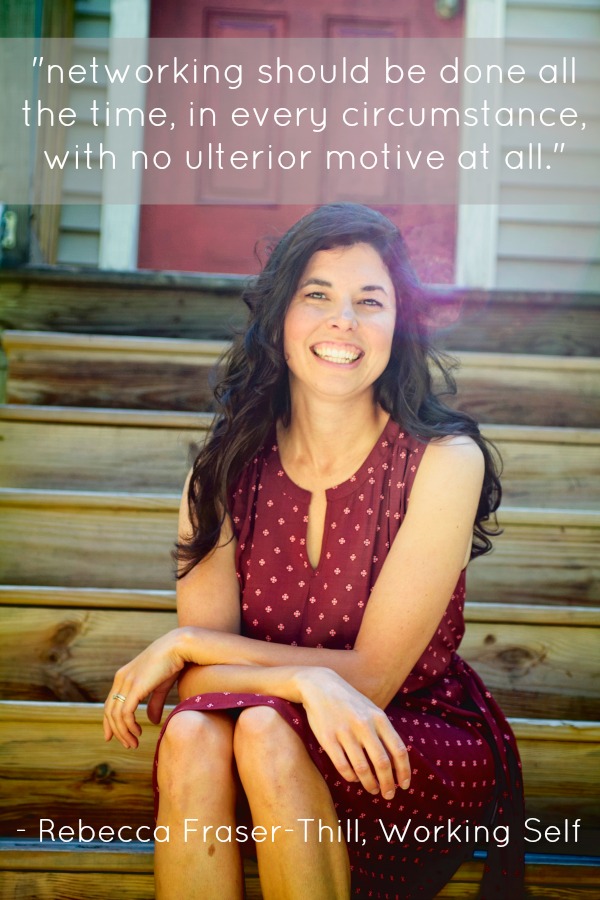
Networking isn’t about superficially seeking people out when you need something; networking should be done all the time, in every circumstance, with no ulterior motive at all. Those relationships are what yield the vast majority of job offers and client leads – either your own or another person’s. When networking is approached in this way, you become part of a giant web of helping and sharing, which is fulfilling in and of itself.

Are creative types doomed to constant debt and worry, or are there ways we can armor ourselves against falling victim to the unpredictable creative landscape?

I hope we’re not doomed! I actually think we overestimate how much security “regular workers” have. The reality is that we are ALL at the whim of the economy, as we saw during the last economic downturn that left thousands unemployed for long stretches of time (and many still are in that boat). If anything, I think creative types are better equipped to handle economic shifts than people who do not identify as “creative.” We creative types are used to taking an existing “problem” and coming up with a novel solution; that’s our bread and butter. So when the landscape changes, we’re ready to say, “huh, maybe I can make money doing X, Y or Z.” It’s all about staying mindful about the convergence of what the world needs and what we have to offer (and creatives have multiple offerings, by definition), then matching the two together as those needs shift.

Any final thoughts to add?

If you want to create a life you feel good about, you have to be prepared to have people scratch their heads about you. The vast majority of my big decisions have been incomprehensible to everyone but a handful of people who know me extremely well. I used to let that bother me, and sometimes would make the “understandable” decision because of the pressure. I see many of my former students take the easy route, too, and I feel badly for them because I know that while they’ll enjoy others’ acceptance, they’ll never enjoy their own acceptance. And the latter? That’s what really matters.


Thanks, Rebecca!

Enjoy what she had to say or have any thoughts of your own? Let us know in the comments. And make sure to come back next week for part two, featuring a Q&A with the founder of One Woman Shop.

How to survive your first year of grad school

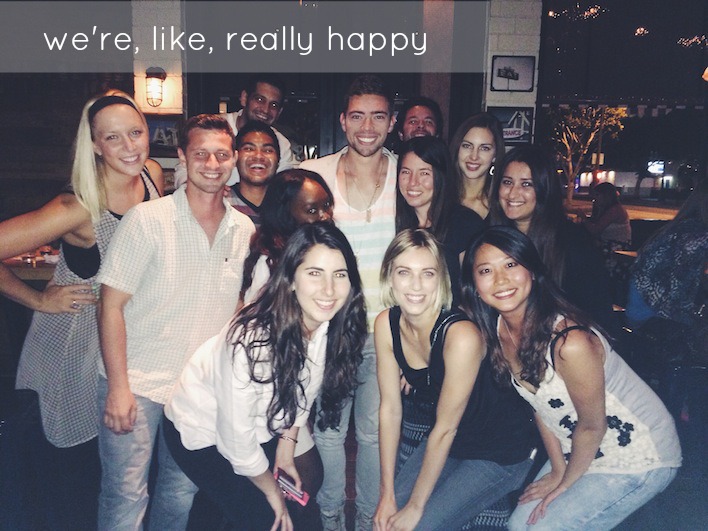
A few of my classmates and me. (Photo courtesy of Scarlett Chen)

A few of my classmates and me. (Photo courtesy of Scarlett Chen)

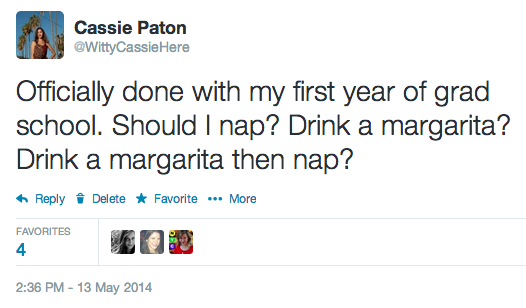
Last week, in a daze, I hit “submit” on my last final project for the semester.

I’d officially wrapped up my first year of grad school, and I wasn’t quite sure how I should celebrate.

Witty Title Here

(The answer, of course, was margaritas. The answer is always margaritas.)

Since then, I’ve been making plans for the summer, which, um, isn’t shaping up to be any less busy. But there’s a lot to look forward to.

And looking back, there’s a lot that got me through my first sometimes-hellish, sometimes-awesome year, and I’m sharing my incredibly helpful and super-serious knowledge with you.

Here’s how you, too, can survive your first year of grad school:

Get a blender. You never know when you might need a margarita or piña colada, and most of us can’t afford to always be hitting up the bars. The best part about owning a blender is you can enjoy your favorite frozen drinks while working on assignments… or while binge-watching Orange is the New Black and thinking, “Hey, at least I’ve got it better than those gals.”

Find healthy distractions. Sometimes, when it’s midnight, you just need to procrastinate before getting to the assignment that’s due tomorrow. My favorite distractions are scouring apartment listings on Craigslist (with no budget limit, of course—Beverly Hills, anyone?) and trolling dog rescue websites while showing dogs’ pictures to John telling him how we need to save the puppies right now.

Give yourself something to look forward to. And by that, I mean food.

Invest in your mental and physical health. In certain high-stress moments of the semester, my cohort’s classes would turn into very expensive group therapy sessions. (“Why do they want us to suffer?” we’d sob.) I also bought a Groupon for 70 percent off yoga classes at a local studio. I might’ve been cursing the teachers under my breath every time we were instructed to hold a plank pose, but ending on savasana every time was a great way to get a quick nap in.

Soak it up. And not just the margaritas. If you’re in a two-year program like I am, the first year makes you realize just how quickly the whole thing will go by. Before you know it, friends will disperse all across the country, hopefully landing some kickass jobs in the process. (Or in our program’s case, moving back in with our parents, because hello, we’re in journalism school. GUYS, I’M KIDDING. WE GOT THIS.)

Follow these five easy steps, and you’ll rock grad school. Cheers and ¡Salud!

The F-word

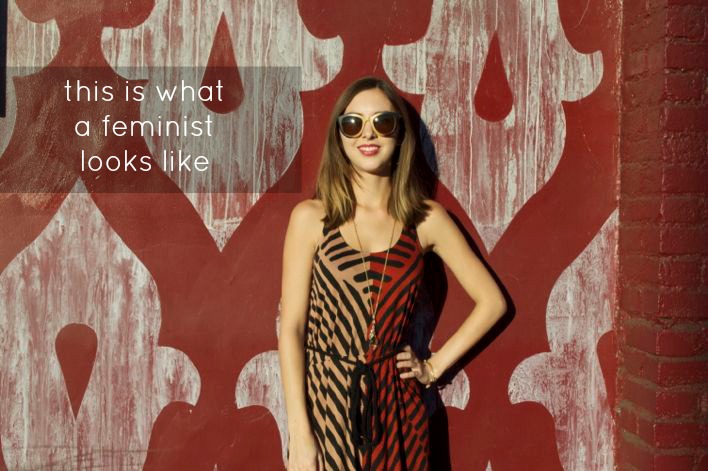
this is what a feminist looks like

It’s hard to believe now, but just a few years ago, I wouldn’t have considered myself a feminist.

I believed in equality. I was into “girl power,” in a Spice Girls sense of the phrase. And I was lucky enough to have had tons of great female role models who inspired me growing up.

So why didn’t I see myself in the word “feminist”?

We’re all well aware of the negative connotations associated with feminism. You’d think most people would understand by now how ridiculously off-base the “angry, hairy man-hater” stereotype is. But too often the comments section beneath articles written by or about a woman makes clear there are a lot of sexist trolls who have yet to die off. (Reminder to self: never read the comments if you want your faith in humanity to remain intact.)

Sadly, the trolls who perpetuate these stereotypes about feminists are pervasive. So is ignorance, which I once blissfully possessed when it came to these things. That unfortunate combination is why I shied away from the F-word. I didn’t think I needed feminism. And that makes me shudder to think about.

I’m the oldest of three sisters. They’re much younger than I am but are growing up fast. I remember the kinds of things girls were talking about when I was my sisters’ ages, and it wasn’t always exactly the most female-empowering language. (Why are 12-year-old girls calling each other “sluts” and “bitches” like it’s a compliment?)

There are lots of words used to put women down. I want my little sisters to know “feminist” isn’t one of the dirty ones.

That means it’s on me and everyone else—male or female—who believes in feminism to talk about it. A lot. The more we do that, the more de-stigmatized the word and concept becomes to those who are as skeptical and hesitant as I once was. Luckily, there are more platforms than ever to help us do just that, and there are plenty of people who get into more nuanced discussions than I can (at this relatively early point in my feminist career, anyway).

It’s a wide-ranging topic for sure, but a few examples of some of the things I’d like to talk more about are:

  • Calling out manipulative ad campaigns like the Dove “Real Beauty” ads. This parody video takes it down perfectly and hilariously.
  • Hypersensitivity to language. Is “#BanBossy” really necessary, or should we be focusing on banning “bitch”?
  • Victim-blaming in cases of sexual assault—particularly on college campuses.

…and so many more.

Do you consider yourself to be a feminist? Why or why not?

I’d love to know about your relationship with the word and which women’s issues are close to your heart. Leave a note in the comments—or better yet, write your own post about it and send me a link when you do!

Leave bland behind: have a damn opinion

don't be a sheep

Do you ever feel like you’re playing things a little too safe?

Have you ever worried about offending people with your point of view (or your occasional tendency to use the word “shitastic”)?

I have. And you know what I think? Screw that nonsense.

Listen, I’m pretty even-tempered. Call it a Libra thing, but I try to see the validity in every argument that seems fair, sane and logical. And while this isn’t always the most productive behavior, I tend to avoid confrontation at all costs. So I’m not what you’d call the world’s most opinionated person.

That said, I’ve got an opinion to share. I’m a little bored with the blogging culture of trying to appeal to a wide audience by pleasing everyone and never coming near anything even remotely controversial. Maybe that’s just where I am as a writer and a reader, but I want a bit of challenging commentary thrown in the mix from time to time.

I believe there’s a simple explanation for why so many bloggers burn out. We’re trying to be happy and creative and professional all the time, and that can be difficult to maintain. For the sake of transparency, we might pen an honest and open essay about our experiences with burnout to feel better and get some encouraging comments in response, but then we go right back to doing the same old thing. Until the next bout of burnout hits.

Don’t get me wrong—I love reading inspirational and light-hearted posts. They brighten my mood and fill my need for passive entertainment. Clearly, I enjoy writing that stuff, too. But if I were new to the personal/lifestyle blogging scene and was toying with the idea of starting my own site now, I’d be under the impression that there’s only one path to success. And I’d probably be so overwhelmed by the notion that everything has been said (over and over) that I might as well not even bother.

But really, I don’t think that’s true at all. All that’s missing is a little flair.

“Be yourself” is such common advice not only from our moms but also from fellow bloggers writing how-to’s on the craft. Those words are so commonly thrown around that they’ve almost lost their meaning. So I propose this saying instead:

Be yourself. ALL of yourself.

Be smart, funny, thoughtful, sincere, inspirational and whatever else it is that truly makes you you. And if you have something to say? Have a damn opinion. Unapologetically.

Let’s stop over-thinking, second-guessing and censoring ourselves, and let’s begin embracing, celebrating and acknowledging our differences in opinions and ideas. I see so many great minds expressing themselves on Twitter calling out assholery and inequality. We should be extending those conversations on our blogs, encouraging discussions in the comments section and not worrying whether someone will disagree. (Because it’s okay if they do.) At the very least, I’d like to see a stronger commitment to the ideas we put out there, rather than wishy-washy language such as “I feel like” or “maybe it’s just me, but.”

You might be thinking, “Yeah, but I’m a design blogger. This doesn’t really apply to me.” I beg to differ.

If you’re a designer who wants to see the chevron trend die already, say so. If you’re a professional photographer who sees novices making the same cringe-worthy mistakes over and over, help them by pointing it out. If you’re a feminist who has a problem with sexist language in an ad or article, call the creators out on it. We’d be doing a service not only to ourselves by doing so, but to the blogging world as a whole. We have so much to say, and it does no one favors when we hold back for fear of hurting someone’s feelings.

I have too much respect for myself and my fellow bloggers to strive for blandness. I intend to take a stance on the things that matter most to me.

How about you? What do you think is worth speaking up about?

Psst. You can highlight any text in this blog post to tweet it. Try it out!

facebookad