Advice from past NaNoWriMo participants on writing your novel


It’s day two of National Novel Writing Month, which means all around the world, writers are furiously typing away at their computers (or staring at blank screens—hey, it’s all part of the process!). I’m happy to report that, despite some major doubts about my plot in the days leading up to NaNoWriMo, I kicked it off by writing more than 2,000 words on day one. Even though it’s Monday and there are a million other things to do, I’m anxious to dive into day two.

But first, I thought I’d share some advice from former NaNoWriMo participants on how to tackle this month like a champ. Even if you’re not joining in on the festivities this month but are thinking about writing a novel, these are great tips to keep in mind.


A reminder that comparison is the thief of joy…

…and that this is supposed to be fun.

Some perspective that the first draft is just a draft…

…and every little bit counts.

Always have a plan for your next session…

…and don’t forget your priorities.

And some words of wisdom from the NaNoWriMo coaches themselves:

Happy novel writing!

Related: 7 tips for making sure you kick butt at NaNoWriMo
Marnie: Excerpt from “Incident Pit”

Excerpt from "Incident Pit" by Marnie

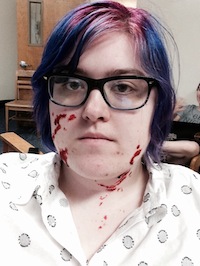
This is a reader-submitted post with a spooky theme (note the author’s headshot!). Support your fellow writers & share it!

Oakes looked up, angling the video camera so that it focused on the slowly diminishing disc of light where Jacob’s Well opened up to meet the divers jumping into it. His nostrils were burning – a few more feet down and he felt his ears pop. The four-meter-wide opening to the Well became a half-moon shape, then a sliver, hidden by a large outcropping of rock. Oakes felt the familiar, fluttery stirrings of an anxiety attack in his gut. What if we can’t make it back up? His vision swam.

Derry tapped him on the shoulder, and Oakes made the mistake of yelling in surprise. A stream of bubbles shotgunned from his mouth. Derry cocked his head and motioned up towards the mouth of the Well, and Oakes understood immediately, pushing off the closest rock with his feet and trying desperately not to hit his head on anything on the way up. His chest felt like it was caving in, his lungs straining to make air, his heart hammering as it worked overtime. Finally, he broke the surface and levered himself painfully out of the Well.

“Oakes!” Derry appeared out of the water seconds later. “You okay?”

Oakes forced himself to the closest platform of rock and sat down. His muscles were singing in pain, and he slicked his wet hair back from his forehead with hands that had started to shake violently. Most of the footage from the ascent was probably going to be unusable.

“I’m okay,” he said hoarsely, more for Derry’s benefit than his own. “I just panicked when I couldn’t see the way out. I can’t hold my breath as long as you can.”

Derry sat down next to him on the rock. “Do you want to stay up here awhile? It’ll look cool if you do some shots from above of me swimming down into the cave, right?”

“Yeah.”


“What if we can’t make it back up? His vision swam.”


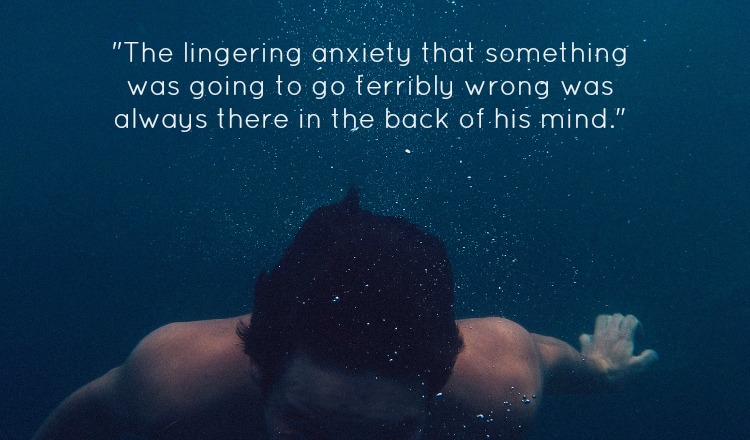
Oakes kicked his feet in the water. Even though he’d been playing cameraman-slash-significant-other to Derry for a year and a half already, it was hard to keep the two roles separate, and the lingering anxiety that something was going to go terribly wrong was always there in the back of his mind. Oakes wasn’t sure he would ever understand why half a million people got such a kick out of watching Youtube videos of Derry doing stunts where one tiny error in judgment could send even a true professional to the ER. But he loved Derry, so when Derry said things like “Let’s go to Texas over your spring break so I can jump into an underwater cave system that people have died in,” Oakes said, stupidly, “Okay.”

“Come on.” Derry kissed Oakes on the cheek, and stood, ignoring the flush that spread across Oakes’ face. “I’ll go down a couple more times and then we can go back to the lodge and order a pizza or something.”

“Can’t we go now? I have hours of footage,” Oakes said. The sun was going down, and doing this kind of thing in the dark made him even more uneasy than doing it in broad daylight.

“Fifteen more minutes. I just want to swim down two more times. Please?”

Derry looked up with big, hopeful eyes, wringing water out of his cargo pants and readjusting his chest binder. He was a blurry, brown figure in Oakes’s vision, and got blurrier the farther away he became, prompting Oakes to dig his glasses out of the backpack of dry clothes they had brought with them.

Not as begrudgingly as he would have liked to, Oakes got up and tightened the camera strap around his hand. “Fine.”

He followed Derry back to the opening of Jacob’s Well, standing on the lip of the expansive hole, where the water only came up to his shins. Dipping the camera into the water, Oakes watched Derry’s body at the center of the tiny screen, growing smaller and smaller until it was only a few pixels, enveloped by the blackness of the long tunnel below.

✂✂✂

“Did you know mountain lions are native to Wimberley?”

“I’m not going to film you wrangling a mountain lion.” Oakes stepped out of the bathroom, toweling off his hair and ducking to prevent smacking his head on the doorframe. “If you wanted to do that, we could have stayed closer to home.”

“There are no mountain lions in Indiana,” Derry said knowledgeably.

“Right.” Oakes’s lips twitched into a wry smile. He rooted around in his suitcase for a moment until he came up with his Purdue University Fort Wayne sweatshirt and a pair of flannel pajama pants, and began pulling them on as he spoke. “Are we going back to Jacob’s Well tomorrow? What time do you want to wake up?”

Derry rolled over on the bed, placing the trail guide he had been reading back on the nightstand. “I already set an alarm. I want to stop at the dive shop near there and rent some equipment so we can go deeper in the caves.”

“Deeper? You know people have died in there, right?”

Oakes turned his back to Derry, no longer feeling capable of faking a smile. Instead, he busied himself with plugging the waterproof camera into his laptop, which sat on the large wooden desk in the corner of the room. He clicked on the video files one by one, opening them and booting up the editing program he used to make their footage palatable for aspiring daredevils on YouTube.

“That’s why I want the equipment,” Derry explained. “It’s a lot easier not to die when you’ve got a tank of oxygen strapped to your back. Do you mind if I turn the light off?”

“Go ahead.” Oakes waved a hand dismissively. It was met with the room falling dark, lit only by the persistent glow of his computer screen. He heard Derry shifting on the bed, rustling the sheets.

“Don’t go to bed too late. I set the alarm for seven.”

Oakes sighed. He had been hoping to sleep in. “Okay.”

✂✂✂

Oakes watched footage of Derry scaling rock formations and diving into Jacob’s Well until Derry began to snore, then got out his noise-cancelling headphones and began to edit the clips down into a ten minute video that he could post to the YouTube channel before they left in the morning. It was another fifteen minutes before he saw the strange anomaly in the film he had taken towards the end of the day.

In the shots he had taken from above, watching Derry descend into the Well, something else was moving around in the water. It was oval in shape, and at first Oakes mistook it for a speck of dirt on the camera lens, but it was clearly swimming. The way the bottom of it undulated provided the bare suggestion of paddling legs. It was only on screen for a few seconds, in the interim between Derry vanishing from sight and swimming back up towards the surface again.


“The way the bottom of it undulated provided the bare suggestion of paddling legs.”


“Probably a fish,” Oakes muttered to himself, and tabbed over to the next file.

It was another video of Derry swimming, taken while Oakes had been standing on a rock above the water. He pulled his chair closer to the desk and scanned the computer screen for signs of anything else but Derry moving around in the depths of the well. There was nothing. At least, nothing until Derry had resurfaced from the Well. The shot zoomed in on the mouth of the hole, and at that precise moment, something large and flat skittered over the jagged walls within, deeper into the water.

Oakes’s heart surged up into his throat, the sudden, unexpected movement making him jump. He played the clip over again, slower, to make sure his eyes hadn’t played tricks on him. The footage hadn’t lied. The creature was still there, even the second time around.

“What the fuck is that?” Oakes asked under his breath.

He paused the video and went back to look at the others, at the ones he had taken while in the Well with Derry. The creature wasn’t in any of them, not as far as he could tell, even when looking at the clips in slow-mo. None of them except the last one he had shot underwater – he had thought that the footage of his ascent from the Well would be too shaky to be used, but he had somehow managed to keep his hand fairly steady. Steady enough to reveal the underside of something looking down at him from the outcropping of rock that blocked out the sunlight from the surface, its antennae twitching, jaws opening and closing so distinctly that Oakes could almost hear the click-clack of them doing so.

How did I not see that while I was underwater? Oakes ground his teeth together. It probably wasn’t even anything to worry about. Just a crab, maybe. There were probably a lot of weird fish that lived in those caves. It was stupid, to be scared of a non-threatening fish.

Nonetheless, he shut his laptop and decided that it was time to stop editing for the night. Being tired was making him jumpy and unfocused, and neither of those were things he could afford to be tomorrow, when he and Derry would be going into the caves proper. Oakes put his glasses on the nightstand and climbed in under the covers next to Derry, who grunted and tugged him closer without waking up.

His dreams were disturbed by the memory of his chest compressing, the feeling of spindly, hooked crustacean legs latching themselves in his clothes and hair and dragging him down through cold, dark water, his body bouncing against rocks like a ragdoll.


Marnie

Marnie is a junior creative writing major at Goucher College, who also makes music and art in what little free time she has. Currently, she is doing a semester abroad in Norwich, England, which boasts such exotic wildlife as swans, hedgehogs, and an entire army of wild rabbits. She is also the author of Something Waiting, a book of original short stories, which you can find here.


Witty Title Here publishes works from emerging, female-identifying writers. Want to submit your short work of fiction, journalism, humor or opinion writing? Send drafts or pitches to .

11 ways to hone your writing craft

11 ways to hone your writing craft | Witty Title Here

No matter how long you’ve been writing, or how good you are at it, there’s always room for growth.

I find that comforting, as I do the idea that no matter how bursting with love your heart may be, there’s always room for more. (D’aww.) With that in mind, here are 11 ways to continue honing your craft as a writer, whether you’re just starting out or have been going at it for years.

1. Read widely

In his book On Writing, Stephen King wrote, “If you don’t have time to read, you don’t have the time (or the tools) to write. Simple as that.” Better keep a steadily rotating stack of books on your bedside table, then. While you’re at it, get a library card. Read a lot in your preferred genre, and read books by authors who don’t look like you. Read books with challenging prose. Read books with short, snappy chapters. You’ll be inspired in ways you can’t predict, and your writing will be better for it.

2. Reread

Wait, what? Yup. Turns out you unlock the secrets of great writing when you treat that page-turning drama like the textbook from which your teacher lifted all the test questions verbatim. Read once for enjoyment, then read a second time to study the tricks the author has used to switch perspective, go back in time or drop a major plot twist. A great writer will do these things without you even noticing what’s happening. Go back in search of those pivotal moments or scenes, read slowly and pinpoint the exact sentence or sections that did the work and dissect them word for word. Those discoveries will manifest themselves in your own work, especially when you make this a regular practice.

“Those discoveries will manifest themselves in your own work.”

3. Expand your vocabulary

If you read constantly, this will come easily. Don’t just fly over words you’re unfamiliar with. Study them. Context is helpful up to a point, but be sure to look up the words you don’t know or jot them down so you can do it later. (Then write down the definitions so you don’t forget.) You can also check out sites like Otherwordly for a daily dose of unusual words. Won’t it be wonderful to use serein in a sentence? When you learn a new word, you start to see it everywhere, and that’s when its meaning finally soaks in.

4. Seek feedback

When you’ve tweaked and blinked at a piece for too long, it can be near impossible to know if you’re hitting your mark. If you’ve hit that point, it’s best to hand your story or article over to someone who can look at it with fresh eyes. Find a trusted teacher, mentor or friend who will read your work closely and give helpful, honest feedback. Seek out people who read a lot and will say more than just “it’s good!” If you’re looking for feedback on one thing in particular, say so, but be open to suggestion elsewhere, too.

5. Know your weaknesses

What part of the writing process do you dread, or where do you most often get stuck? Instead of avoiding the problem (or getting exasperated every time you write), identify what gives you the most trouble in your writing. If it’s spelling or grammar, seek out a tutor, have a friend proofread your work or read up on Grammar Girl’s quick and dirty tips. If making sense of a rambling, disorganized first draft gives you problems every time you write, spend the extra time mind-mapping and outlining before you get to work. If you fall prey to procrastination or give up too easily, come up with a plan to help you combat those urges. Whether it’s a regimented routine or rewards system, don’t let yourself fall victim to the thoughts and temptations that crop up in moments of weakness.

6. Challenge yourself

Write outside your genre. Set intimidating goals. Tackle the classic novel you never read in high school. Enter a writing contest. Participate in NaNoWriMo. If we only wrote when the conditions and timing were perfect, we’d never write. No excuses.

“Write the truest thing you know in the least amount of words.”

7. Emulate your heroes

One of the best things about writing is that you’re allowed to experiment as much as you want, and that includes letting your work be influenced by the styles of writers you admire. If Joan Didion is your literary crush, spend a couple thousand words on a piercing review of your own psyche. If you love Charles Bukowski’s bare-bones truth bombs, write the truest thing you know in the least amount of words. And if you believe you were Jane Austen in a former life, ask yourself, “What would Jane do?” when writing the final scene in your romance novel. Let yourself be inspired by greatness and see what comes of it.

8. Develop your own voice

There are always a few books in your to-read pile, you’ve studied the greats and you’ve learned all the “rules.” Now forget everything you know and write something only you can, in your voice. That requires not only writing constantly, but cutting out the bullshit or anything that rings false. Your voice is influenced by your gender, age, race, religion, sexual orientation, beliefs, family, upbringing, where you’re from, who you grew up with, the stories you’ve been told and so on. It’s already in you. Voice is a tricky thing to master because it’s so deceptively simple, but you’ll know it when you’ve written something that feels utterly true. Your voice evolves right along with you, which means you’ll always be developing it in your writing.

9. Revise, revise, revise

Nothing comes out perfect the first time. Let me reiterate: Nothing comes out perfect the first time. This is no reason to be sad or frustrated. Look at it as an opportunity—the opportunity to get better with each draft.

10. Submit and pitch

Congratulations—you’ve written something. Now set it free. Submit your story to a publication or pitch a story to your dream magazine. Open yourself up to the possibility of rejection while keeping faith that you will be validated. Don’t keep it to yourself.

11. Write every day

Make the time.


What happens when we let fear dictate our art

Praise can be addictive.

Whether it’s Instagram likes, parental approval or compliments on our writing abilities, we get a dopamine rush with each reward. The desire to belong is a basic instinct of human survival. (Plus, it just feels good to be liked.) But we’d all be better off if we gave fewer shits about what people think.

Intellectually we all know that, right? Somewhere inside each of us, there’s a tiny pantless version of ourselves giving People With Opinions the middle finger. And then there’s the other miniature version of us in grown-up clothes hoping to blend in with the cool crowd. Unfortunately, the insecure one often takes over even the most confident of us from time to time.

When I picture myself at 70, I picture a woman with long, gray hair who swears a lot, laughs a lot and says exactly what’s on her mind. When people’s eyes widen in response to her brazen herness, she flashes them a big, red-lipped grin. Except I don’t want to wait until I’m 70 to be the picture of Not Giving a Shit. When it comes to my writing, I simply can’t afford to wait.

Why we need to give fewer shits about what people think.

Most of us are not writing in a vacuum. Most writers want to be published, to find an audience, to be read by more than, like, three people. And who doesn’t dream of becoming a best-selling author? Of course we want to be seen and, hopefully, we will get to relish in some praise and recognition (maybe even money?!) for our efforts.

But there’s a fine line we all must walk when it comes to our motivations. As writers, artists and creatives, if our desire for acceptance outweighs the desire to share truth in all its raw vulnerability, we essentially hand over our power to outside sources. Our work ends up being shaped not by our authentic voices, experiences and beliefs, but by what we think people want to hear. And if we don’t get the approval we seek, it’s a dark, lonely feeling.

When we create art with the intention of being popular, the end result only reinforces ideas people already agree with. At best, you’re just adding to the noise. (If you haven’t noticed, there’s a lot of lame-ass content on the internet. Who needs more?) At worst, people will see right through you. Either way, no one really benefits from it.

No good comes from writing watered-down versions of our truth, but it’s especially tragic if our fears and self-doubt prevent us from writing anything at all. If your story is deeply personal, highly controversial or simply way out there, you’re inevitably going to raise some eyebrows. But if you’re trying to avoid pissing people off or making them uncomfortable, you’ve made your job impossible. You can’t worry about the outcome of writing or publishing your story before you’ve even written a first draft.

There are no rules in art or in life. Just the limits we impose upon ourselves.

I turned 26 last week. It’s a weird age—nothing especially special about it. Yet it’s fascinating to me the range of life experiences my peers have had. We live with five roommates, we live with parents, we have kids, we start companies, we buy houses, we travel the world. At 26—or at any age, for that matter—there is no normal.

It can be utterly frustrating when there’s no roadmap for where you “should” be at a certain stage in your life. But it’s also  liberating. It means we can define and redefine our versions of success. And by success, I mean a life of creative fulfillment and happiness, at least a good majority of the time.

So rather than worry about whether we’re going to be judged, ridiculed, laughed at, pointed at, shunned or ignored, let’s make a pact to put integrity before mediocrity. Audacity before fear. We’re never going to please everyone, anyway. Might as well be ourselves.

I don’t give a shit if that sounds hokey. It’s true.

Writer Spotlight: Nicole Belanger

Writer Spotlight: Nicole Belanger

As a writer, feminist and creator of this here site, I’m excited every time I come across someone whose mission is all about lifting up other women and whose writing I so admire.

I’m not sure how exactly I came across today’s interviewee, although Twitter was likely involved. Nicole Belanger is a writer and public speaker who talks about feminism, perfectionism and grief with eloquence and candor. Once I began reading about her latest project, Conversations With Her, I knew I wanted to have a conversation with Nicole. Lucky for us all, she agreed, and she has some wise words to share.

Meet Nicole Belanger

Tell us about your latest project, Conversations With Her. Where did the idea come from, and how did you choose your interview subjects?

To be honest, I can’t quite remember how the format came into being, but the idea came to me out of the blue last spring. I was having yet another moment of being brought to my knees with gratitude for all the phenomenal women that I have had the pleasure of knowing so far in my life, and I thought, “I just want to shout from the rooftops about them, I just want everyone else to know how great they are.” So, without much of a plan, I sent a tweet to a woman (Kate McCombs) that I followed on Twitter whose work I had admired from a distance and asked her if she would be open to being the first interview in a series that I’m starting. Thankfully, she was excited about it!

The only criteria I have for choosing a subject (beyond identifying as female) is that I am drawn to her and her work—for whatever reason. Sometimes these are friends or people that I’ve known for a long time. Other times I’m approaching complete strangers on social media!

Why is telling women’s stories is so important? What do you hope will result from the project?

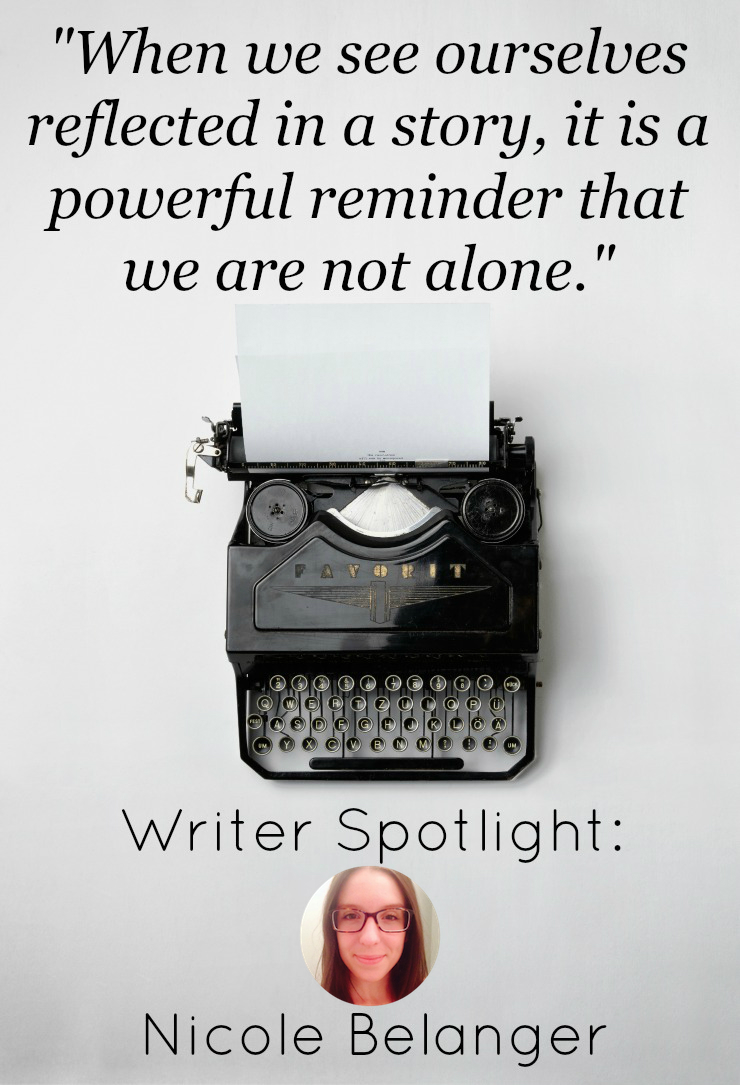
Stories in general have this magical healing quality to them. When we see ourselves reflected in a story, it is a powerful reminder that we are not alone. I want every woman to have that experience. That moment of, “Wow, me too, I guess I’m not the only one.” To do that, we need to collect and share as many narratives about women’s lived experiences as humanly possible.

Another piece of it is that stories have the power to tune us into possibilities within ourselves that we never realized were there. They can be an invitation to imagine new ways of living and being that we didn’t think were possible. That’s really exciting to me.

Who are some of the women and writers (and women writers!) you admire most?

The list is endless, so I’ll give you some favourites women writers of the moment: Lyz Lenz, Stacia L. Brown, Safy-Hallan Farah, Durga Chew-Bose, Alana Massey, to name a few!

Nicole Belanger: Conversations With Her

You call yourself a “recovering overachiever.” How has your definition of success changed since you’ve dropped your overachiever tendencies?

It’s ever-changing, but I’ve let go of titles in a big way, and I’ve also let go of any major “career planning.” Things happen in their own time, and I’ve found that all you ever really need to do is work hard, keep your heart/ears open for the guidance, the “pulls” that will tug you along in the right direction, and then follow them.

You write a lot about grief and have been very open about mourning your mother. Once you allowed yourself to experience the grief of losing her, what steps did you take toward recovering? What was most helpful for you?

Short answer to a long question? Being kind to myself. That was a fucking battle. Allowing myself to be sad and messy and not super fun to be around and slow and needy.

It was a long, gradual process of cracking myself open. Cracking the veneer or perfectionism and logic and intelligence and maturity and control and letting a tender, vulnerable version of myself come through—the self that needed healing and attention. I was so scared to let that self through. I was afraid that she wouldn’t fit into the life I had built for myself, the life that I loved.

So day by day, month by month (and, if we’re being honest, year by year), I cracked myself open. At first, it was through my therapist’s assigned daily 15 minutes of grieving—literally forcing myself to take 15 minutes to sit with my grief, that’s how buttoned up I was. Then it was things like reading Cheryl Strayed’s Wild, and letting that give me feelings. Then it was writing about it. Then it was talking about it with others.

It was such a long, gradual process that I’m not sure I could look back and point to some specific step or strategy that made a big difference, but huge credit goes to my supportive, patient, and understanding circle of loved ones.

Your newsletter Girl Gang Missives is so wonderfully curated. What do you love about the medium and the community you’re growing?

This is my desire to shout from the rooftop about how awesome women are coming through again! Honestly? It’s just fun. It’s exciting for me to learn about what women across industries and walks of life are doing, and it’s really satisfying to amplify their work using my newsletter. I love that it’s fun, casual, and informal—like I’m sending an interesting article to my cousin.

Also, it is positively thrilling when a woman sends her work in to me to be featured. We deserve to have our work recognized and celebrated and put in the hands of the biggest possible audience!

Do you have any writing rules, routines, or mantras?

To be totally honest, I don’t. It changes week by week and month by month. It’s really about listening to my body. Last month, I rented an office in a coworking space to grind out the last of the work on my first ebook. This month? I’ve been feeling like a slower pace is in order, so I’ll be working from home to allow myself more flexibility. It’s basically body’s choice.

What advice would you give to your teenage self on writing and pursuing a career?

I recently heard one of the greatest pieces of career advice, and although I’m not sure I would have been able to internalize it as a teenager (or even a few years ago), it would have been helpful:

“If you want to achieve your dreams, you must follow them, and the best way to follow them is not to think about wanting to be very rich, but to think about doing something that you really want to do.” – Jackie Collins

What are you reading right now, or what’s on your to-read list?

On my night table right now is Syd Field’s The Foundations of Screenwriting, because that’s something I’m planning to explore this year. I also just wrapped up Rupi Kaur’s utterly breathtaking collection of poems titled milk and honey. Up next? I’d like to read God Help The Child by Toni Morrison, Legacy by Waubgeshig Rice and more of Barbara Kingsolver’s novels.

What work are you most proud of? What kinds of projects would you like to pursue in the future?

Right now, I’m really, really proud of the fact that I’m about to self-publish my first ebook. It’s a special collection of Conversations With Her pieces on the theme of resilience. The seven women featured in the book are remarkable individuals with tremendously powerful stories. I know that they will make a lot of people feel less alone, and I can’t wait to put that love out into the world. It’s going to be amazing.

Now that the book is wrapping up, I definitely have an eye to the future and am spending quite a bit of time thinking about what I’d like to do next. Like I mentioned earlier in the interview, I’m feeling a real pull toward screenwriting, so I’m definitely planning on following that pull to find out what that’s all about. I’m also really feeling guided to create some content around women’s reproductive and sexual health—what exactly that will look like, I’m not sure. But it’s something that I know can make women (myself included) feel awfully alone, and you know by now that I can’t stand for that!


National Novel Writing Month: 7 things you need to prepare

how to prepare for National Novel Writing Month

Well, here it is: I’m participating in this year’s National Novel Writing Month. Let the madness commence.

This is my first time participating in the quest to get 50,000 words of not-entirely-coherent story on the page during the month of November, and it goes without saying that the idea of the whole thing is a little intimidating—and also exhilarating.

In NaNoWriMo, as it’s called, there are generally two kinds of participants: the planner and the pantser. The pantser generally goes in without much more than an idea, some inspiration and a lot of motivation. The planner’s approach varies in intensity, ranging anywhere from a loose outline and some character sketches to a fully fleshed-out, all-but-written story.

Given that quitting halfway through November because I have no idea what I’m doing would be way too easy, I’ve decided to take the planner’s approach by taking notes, creating character backgrounds and generally trying to wrap my head around the story it is that I want to tell. I’m also arming myself with a few essentials to further increase my odds of success.

If you’re participating in this year’s NaNoWriMo—or if you’re on the fence—here are 7 things you need to prepare (whether you’re a planner or pantser):

A fresh notebook

My number-one must-have is a crisp new notebook in which I can jot down notes and ideas away from the computer. I often find that when I’m having a hard time letting the words flow on my laptop, switching to handwritten notes helps ideas come much easier.

I love a high-quality Moleskine, but my notebook doesn’t have to be expensive or fancy—a fresh composition notebook is just as exciting (and way cheaper). Large spiral-bound notebooks are the best for easily turning pages and lying the notebook flat. It’s also a good idea to keep a tiny notebook that you can throw in your bag for when you’re out and about and inspiration strikes.

A file folder or inspiration board

Have a dedicated folder for all the clips, quotes, photos and ideas that inspire your novel. Physical folders or binders are nice for having tactile inspiration to flip through, but digital files can be just as helpful (and easier to reorganize as needed). You can even create multiple Pinterest boards for your setting and characters.

I’ve also found that having a few favorite quotes on writing helps keep me grounded when self-doubt starts creeping in. Looking for some quotes to keep you motivated? I’ve started a NaNoWriMo 2015 Pinterest board of quotes you can borrow from here.

Related: 7 writers on writing & perfectionism

A calendar

November will pass by in a blur, so having a visual reminder of how much progress you’ve made and how much time you have left will be essential for staying on track. Keeping your Google calendar open in another tab will do the job just fine, but if you want the satisfaction of crossing off each day and updating your word count (you need about 1,667 words a day to hit the 50,000-word goal!), opt for a physical calendar you can write on. You can get a free printable NaNoWriMo word count calendar here.

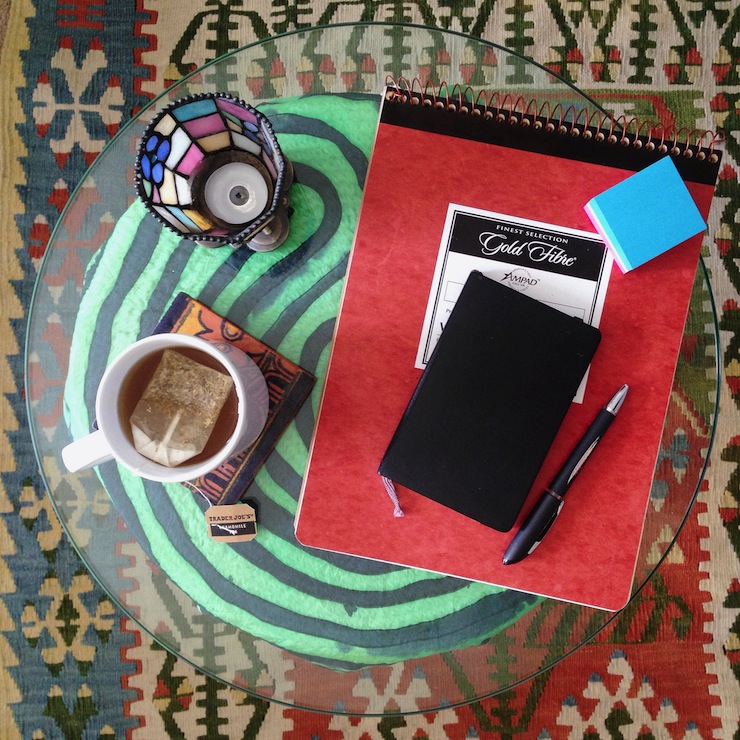
NaNoWriMo prep

Tea and candle optional, but recommended.

A routine

A routine is the probably the most important thing you’ll need and the most difficult to maintain, especially if you’re in school or have a crazy work schedule. Come up with a writing routine before November rolls around so you can simply focus on getting words on the page. If your schedule makes it impossible to hit 1,667 words on certain days, don’t punish yourself or give up. Instead, write what you can on your busiest days—even if it’s just one page—and block longer periods of time during your off-days to make up the difference.

You might need to make some other adjustments to your lifestyle to keep your routine on track. For me, that means getting up and going to bed at the same time every day instead of when I feel like it. And since I work from home on the computer, I’ll need to separate my novel-writing time from my freelancing time so I don’t bounce back and forth mindlessly between the two.

Someone to keep you accountable

Attempting to write a novel in a month is kind of ridiculous when you think about it, and there will definitely be times when you want to bag it or let yourself be distracted by other things. An accountability partner can help you keep your eye on the prize. Whether it’s a friend, a parent or another NaNoWriMo participant, telling at least one other person who you can trust to cheer you on can be the difference between giving up during week one and having a complete first draft on November 30th.

It’s also a good idea to tell your family or roommates about your plan. They might not understand why you’d take on such a masochistic task, but hopefully they’ll support you regardless and know when to leave you alone.

A playlist

This one is mostly for fun, but it can also be incredibly helpful. If you enjoy writing to music, put together a playlist that gets you energized and focused. (Just try to avoid any songs you know all the words to and might be tempted to sing along with!) You can even create a soundtrack inspired by your book’s characters, plot and mood. If your novel takes place in a specific time period, use songs from that decade to put yourself there. Here’s my book’s playlist.

A distraction-free workplace

If you have a designated spot for drafting up your novel, keep the area clutter-free and someplace that you’ll enjoy working. You can stock it with fresh post-it notes or index cards, your favorite healthy snacks, tea, whatever—anything you find comforting or helpful.

If you don’t have a desk and are rotating between your couch and kitchen table,  just remember to take a moment to make your space comfortable and clean, keeping everything you need within arm’s reach. If you get sick of your workspace, head to the nearest public library!

Some other resources you might find helpful:

For writers 17 and younger, NaNoWriMo has a Young Writers Program which includes forums and resources specifically for you. (This might be a great place to find an accountability partner.)

If you want to outline your novel ahead of time but aren’t sure where to start, the Pre-Write Project from Kristen at She’s Novel is a workbook to help you do just that. It’s designed to complete in five days and costs $7. I haven’t used it myself, but I’ve heard good things!

And lastly, a kickass, comprehensive list of prewriting tools to help your novel take shape.


Are you participating in NaNoWriMo, or have you in the past? What are your must-haves?