Writing is craft

When I started the guest post series, I had no idea there’d be so many people interested in contributing! There are still lots of talented guest writers to look forward to in February. After this month, I will continue to share the talent with you, but on a more scaled-back level. But right now, please welcome the lovely Madeleine Forbes.

guest post series

writing

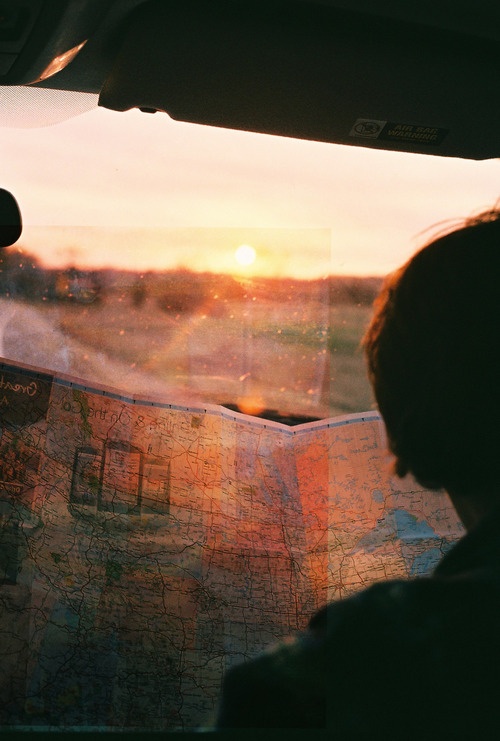
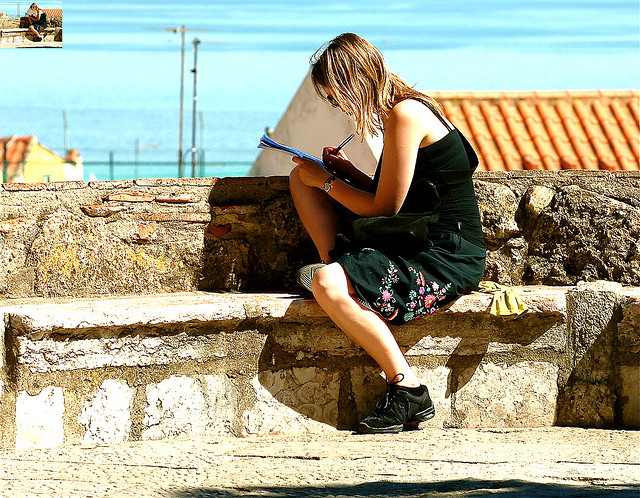
I’m in the mountains of Portugal, the Serra da Estrela. The farm is basic, we have no heating or electricity, water comes from a pipe in the rock. I have drunk coffee that morning and gone for a walk. Crouching in the dew, the morning mist dampens the pages of the cloth bound notebook my brother gave me. I write what I know in that moment.

A cool morning but no rain. Blue sky and the sun piercing cotton wool clouds above the mountain. It’s the last Sunday of 2012 and all is quiet except for the rushing of the river. Already I am losing track, already I had to count on my fingers to work out the date.

The first things I ever wrote were on paper, stories I illustrated laboriously in a quiet corner of the classroom, secrets recorded in salvaged notebooks, journals wept over, burned and ripped. Now I scribble fragments on the back of receipts and train tickets. I gather them online because I’ve found as words are written, they become polished, like river stones. Sentences untangle and flow in different ways. It’s a kind of processing, refining. Trouble is, onscreen they grow slippery, are too easily flushed away.

Offscreen, the words we write exist beyond their meaning. They mark, they stain. Sheets of paper stack up and fold. Mistakes are crossed out, torn through, filled in. Sometimes it’s easier just to leave them as they are. There is no delete, no cut-and paste. I like the way Tammy Strobel puts it.

“I’m on the computer too much and there is something freeing about putting pen to paper. I’m also less likely to edit while I write. I just keep the pen moving across the page.”

At the same time it’s lighter somehow, on paper. The things I use a pen for: shopping lists, fridge notes, directions. Ephemera, not to be kept. It’s exciting to step off the grid and make marks, to write messages only you will see. It’s how I started writing a book, because away from the screen it didn’t feel like work, it felt like imagination, like play.

Doesn’t matter how you do it. Write in a cheap crappy notebook like Natalie Goldberg, because “you feel that you can fill it quickly and afford another”, or write in a luscious Moleskine with a fountain pen.

Write whatever you can smell and taste and touch and hear, what you see when you step up away from the brightness and look around. Write down that weird dream you keep having in the minutes just after you first wake up, the thought that scares you, the thing you would never admit to anyone, something that only you remember. You can burn it if you want. Write neatly and admire your work, write badly, cross it out. It’s only paper.

“I pay more attention to each word and sentence because they take so much longer to create. I am more aware of the music and rhythm of it, because I have slowed down to such an extent that each sentence sounds and echoes in my head as I write it.”

– Andrea Eames

With a scrap of paper and a pen, you can capture moments out of the air, like magic. Go back to it once in a while, when things get stuck, when you need to walk somewhere, to hold your head up, when things are stuck. A word or two is enough. It’s a good habit for a New Year, it takes no time at all, and it’s free.

You never know where it might take you.
Madeleine Forbes
Madeleine is a writer, cyclist and aspiring beekeeper currently living in Cambridge, England. She posts rambles, musings and meditations sporadically at madeleineforbes.
wordpress.com, which often start life as scribbles on scraps of paper she finds at the bottom of her bag. She is currently working on her first novel.


photo credit: pedrosimoes7 via photopin cc
Interweb Finds: Touring the world, men against misogyny & more

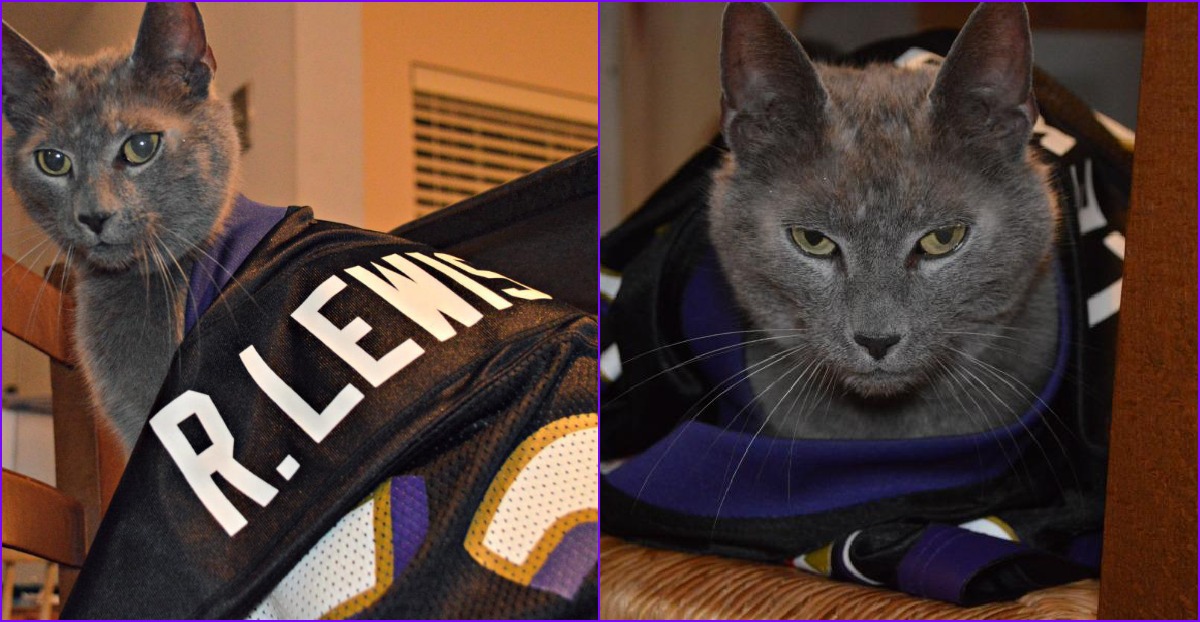
gray lewis

Today means one of three things to you: it’s the Super Bowl, it’s the Beyonce show, or it’s Sunday. Here in Baltimore, it’s the freaking Super Bowl, and the Ravens are in it to win it. Pictured above is the veteran spirit animal of the team, Gray Lewis. In celebration of tonight’s big game, John and I are firing up the deep fryer and eating wings, french fries, guacamole, and my dad’s famous seafood pasta salad. To make the celebration even sweeter, the CEO at my work gave the whole office the day off tomorrow so we could be irresponsible tonight and sleep it off tomorrow. Yeah, Baltimore doesn’t joke around with its Ravens.

Until the festivities kick off, entertain yourself with this collection of fascinating interweb finds:

Ever wonder what it’d be like to visit the Moai statues of Easter Island in Chile? What about a balloon flight in Bagan, Myanmar? These 360 degree tours of the world will blow your mind.

For more worldly inspiration, check out this tour of a renovated Brooklyn carriage house reminiscent of Bali.

This friendship between a straight woman and a gay man turned into something more—a fulfilling marriage.

The colors! The shapes! I want everything by artist Dawn Gardner.

For your daily holy shit moment: a surfer rides a record hundred-foot wave.

Stand up with me for a slow-clap. Men against assholes and misogyny.

And for your morbid curiosity fix: the fascinating (and creepy) practice of photographing the dead. Warning: some of these people look like straight-up zombies.


Also, a big thanks to everyone who voted me for 20SB’s blogger of the month! Check out my Q&A here. Happy Super Bowl Sunday, and GO RAVENS.

The evolution of identity

This guest post series is still going strong! For the next installment, please welcome the lovely and talented Clem from Oh Clementine.
guest post series
via designlovefest

via designlovefest

Almost four years ago, I wrote a post on my blog about how I didn’t know who I was. It’s not surprising; I was fourteen. I don’t think I should have known who I was at that age, really, mostly because I wasn’t anything. I was developing into something, but I wasn’t quite there yet. I was straddling that fine line between child and young woman: too old to be a kid, too young to be a woman.
 
Now I’m eighteen, newly an adult, newly living away from my parents (and cats!), trying to figure everything out. I don’t want to be presumptuous, but I’m sure everyone goes through this. While I attempt to really find my identity and cling to it, I can feel confident that everyone around me is doing the same thing. Isn’t that what university is for, anyway? (I’m doing a liberal arts degree, so the answer is “yes.”)
 
Young adulthood is a strange time. There’s some validation in being legally an adult, in having new rights and responsibilities. You feel like you know how the world works, at least kind of. More than your fifteen-year-old brother does, anyway. But it’s also confusing, because there’s so much you don’t know. When you’re still a minor, it’s okay not to know things—how to plan meals; how to not be swayed into buying boxes upon boxes of Bagel Bites and waffles by killer sales at your local grocery store; how to get yourself to bed at a decent hour; how to file your taxes. Basic things like that, and more complex things. But then when you’re officially an adult, it’s overwhelming, because you don’t know how to do anything, and other adults do. (Or maybe I’m just, you know, bad at life. It’s possible.)
 
I guess what I’m trying to say here is that I do and I don’t know who I am. When I was fourteen, I didn’t know where my passions lay, how far my beliefs extended or the nuances they conveyed. I didn’t know what clothes I liked or even what hairstyle looked best on me. Now, I know more about those things. But I still feel like I don’t have a firm grip on who I am. I don’t have some sort of holistic picture of myself in my mind. I don’t know who I am in relation to others—or is that even identity? Is that just others’ perception of me?
 
Maybe that’s just a testament to human complexity, though. Most people can’t be distilled so easily. Humans are complicated, and contradictory, and fluid. My identity isn’t static, and neither is anyone else’s—or, at least, it shouldn’t be. We should always strive to evolve; I truly think that stagnant identity is one of the worst things that could happen to a person. (I think that probably sounds pretentious. Maybe “pretentious” is a part of my identity.)
 
Sometimes I really like writing because the more I attempt to articulate my thoughts on a topic, the more clear my thoughts on it become. And sometimes I like it because in attempting to answer a question, I come up with more questions. That’s what’s happening here. In trying to put to words my own struggle to know myself, I’ve raised more questions.
 
Like, Does it even matter? Is it important to know who we are?
 
Like, If we’re just going to evolve anyway, why should we stress over knowing ourselves?
 
Like, How is my identity influenced by the way others perceive me? (Or the way I think others perceive me?)
 
Like, What is identity, anyway? (Sorry. I took a philosophy class last year and I didn’t really like it, so it’s not my intention to get all epistemological on you. It’s just, you know, it’s a question I have.)
 
I don’t know the answer to any of those questions. I don’t know if it’s a worthwhile pursuit to attempt to define myself, if I’m boxing myself in or if I’m learning important information about myself. But something I know is that I want to know who I am, however foolish or useless that may be.
 
Who am I? Who are you?

clementineClem is a Canadian university student with a penchant for dystopian literature, pretty dresses, things that go “meow,” politics and social justice, folk music, and cramming her brain with useful and useless knowledge alike. She has no professional qualifications to add to this bio, unless you count folding people’s overpriced t-shirts at Urban Outfitters a year ago. She blogs about books, music, her truly thrilling life, and occasionally her cats at the creatively-named Oh Clementine, and can be found reblogging pictures of dogs doing funny things on Tumblr.

 

Why don't you stick around?

Tweet This

On momentum

momentum

If you get even the slightest bit of forward momentum, run with it. Don’t question it. Don’t hesitate.

Don’t let yourself go to that place in your mind where all of the worst-case scenarios lie. The worst-case scenario is that you leave your momentum hanging there, left unused. It’ll go stale quickly once it’s been opened, whether you use it or not. Yep—even when you run with it, you’ll still run out of it. But if you used what momentum you had, it wasn’t a waste. You’ll still hit a wall, but at least there will be something to show for it. When you’re at that wall, out of momentum, don’t walk away—tempting as it is. This will be the true test of your will. Of your desire. Now that the adrenaline has been tapped out, all that’s left is you. That can be a freaking scary thing to face. You? Alone with your thoughts? Terrifying. Or exhilarating. A little bit of both. That’s when you’ll produce either your greatest masterpiece or a pile of shit. You might prefer one over the other, but both are a success. Because even a pile of shit is something. It can always be cleaned up later. Don’t let others’ masterpieces distract or intimidate you. Chances are, they left a lot of piles of shit behind them, too. (Tired of the pile of shit analogy? Okay, sorry—moving on.) Those people have only chosen to show you the best of themselves, and you can’t blame them for that. It might be what you’re striving for, too, but don’t be afraid to get your very worst creation out first. That is what you call courage. Creation. Creation is courage. Vice versa. You’re not doing this for the comments, the “likes,” the praise. Don’t think about your audience before you’ve even started. You’ll just be paranoid that they’ll see right through you, and you’ll be right. This is yours. This momentum is yours. The stagnancy that follows is also yours. Use both to your advantage. Run with it. Slow down when you’re short of breath, but keep running. Run through, around, or over that wall. Something is there, waiting for you, on the other side.

And the only person it belongs to is you.


On an entirely unrelated note, I’m now a monthly contributor over at Pooping Rainbows. Intriguing, right? Check out my first blog post on kicking the bucket list.

Why don't you stick around?

Tweet This

The “Lucky” Ones – An interview with foster co-parent Rachael

Today’s interview is one of the most fascinating yet of this series. If you’ve ever wondered about the intricacies of foster parenting (the emotional roller coaster, the complicated legal process, etc.), read on about Rachael’s experience.

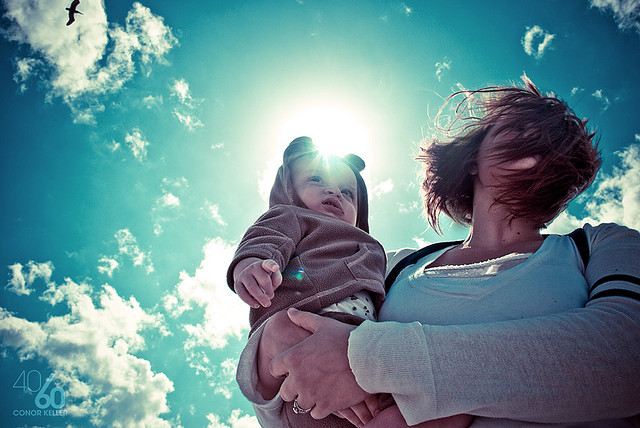
Kevin Conor Keller via photopin cc

Kevin Conor Keller via photopin cc*

Ever since working in the children’s department of a domestic violence victims’ shelter, Rachael knew she wanted to be a foster parent. She was only in high school then, but the eight years Rachael spent working at the shelter opened her eyes to just how many kids were in need of temporary homes. That experience solidified her belief, and after Rachael married her husband, Andy, they spent a couple of years seriously discussing the possibility of foster care before making it official. Their’s was a unique case—unlike many foster parents, Rachael and Andy are in their late 20s, they’re not religious (as is common in the world of fostering), and they decided to foster before having biological children. Their first, and so far only, placement was just four weeks old when she came into their home. “M” has brought so much joy into their lives over the past year—she’s now 13 months old—and yet the uncertainty of her future and their future as a family is a constant source of anxiety.

Rachael and Andy live in upstate New York—she’s an editor, and he works in sales. Rachael also blogs about the joys and struggles of parenting (as well as regular daily life) at Making it Awkward.

Welcome, Rachael!

Let’s start with your work with domestic violence victims. What was your role at the shelter, and how did working there influence your decision to eventually become a foster parent? 

I started at the shelter as a volunteer in the Children’s Program in my senior year of high school. My job was, basically, to play with kids. It was pretty great. I went into it expecting scared, bruised kids and haunted, weepy mothers, but really, by and large, the kids were normal kids and the women I worked with were incredibly strong. I ran “playgroups” for any kids we happened to have in residence. In the hours that the playroom wasn’t open, I’d spend time with the kids and their moms in smaller groups or one-on-one, and I found out that many of our kids had been in and out of foster care. Domestic violence happens in all levels of society, but in many cases it appears concurrently with drug abuse and various other issues. I was surprised that some of the “normal” moms had had kids taken into foster care. I was surprised that some of the kids’ own dads called in reports on the moms as a new way to manipulate and abuse them. I was horrified at some of the reports of foster kids not being allowed to eat with the rest of the foster family, or only eating one meal a day, or other, much worse, things. Even as a senior in high school, I knew I wanted to be a mom someday, and I knew I could be a better foster parent than some of these people I was hearing about. I felt passionate about the work I did there and worked there for eight years (and after we started dating, Andy occasionally volunteered there too).

What were some of the things you and your husband discussed before ultimately agreeing to foster children? Did you have to make any sacrifices or compromises?

I’m grateful that my husband and I have pretty similar ideas about community and social justice, and we’ve discussed fostering and adoption as possibilities for our family since we were dating. I first brought up really becoming foster parents the summer we bought our house. We had all these rooms! We could put kids in them! Andy wasn’t ready to be a parent at the time, but told me that I could certainly bring it up again. So I mentioned it probably twice a year until last summer, when we happened to be looking into adoption (both international and domestic) and discovering how expensive and restrictive it is. Andy agreed that since we were considering parenting anyway, we should go ahead and look into fostering. Before deciding to go ahead with it, we talked about our end goal: did we only want to foster if it led to adoption? Ultimately we decided that no, there are a lot more kids who need temporary homes than permanent ones in our county, so we’d sign up for all of them and see what happened.

Describe the process of becoming certified. What kinds of meetings and classes did you attend? Were you required to make changes in your home and lifestyle? 

The morning we had the discussion where Andy finally said yes, I called to get more information and was told there was an informational session that very night! We attended, and before we left we signed up for the required training program our county uses (M.A.P.P.). The classes, to my great surprise, are NOT about how to be a foster parent. They’re about helping you decide if foster parenting is the right choice for you and your family. There were classes ten weeks in a row, three hours each. I found the classes painfully slow and repetitive, but I realize that it’s important that everyone fully understand what they’re getting themselves into. We do get supplemental training, some required and some optional, on issues like fostering kids who have been sexually abused and on building relationships with bio-parents. We had our home inspected twice and had several multi-hour interviews with different caseworkers. We had to have a crib and a carseat and working smoke detectors and a carbon monoxide detector and a fire extinguisher before we could be certified. The process, starting with our first informational session and ending with our certification last October, took a total of five months. We’ve been told that this is on the shorter end of the spectrum, since we attended every class and scheduled appointments as quickly as we could.

Why did you decide to become a foster parent before having children of your own? Do you want to have children, and if so, will you continue to be foster parents?

Before we decided to foster we talked a lot about whether having a biological child was important to us. We both felt that if we were going to foster, it would be a good place to start parenting. I guess it boiled down to knowing myself well enough to know that if I had a kid already, it would be much more difficult to take on the risks that come along with foster parenting. After our foster daughter, M, was placed with us and we’ve seen how uncertain our future with her is, we decided that yes, we would like to have a biological child, because in a way we’ll be in charge of that kid’s story. We won’t be depending on caseworkers and a judge and our child’s other parents to make certain choices: this child will be ours in a way that we haven’t had (yet?) with M. We started trying to conceive this summer and I had a miscarriage at eleven weeks, which sucked. It sucked a lot, actually. And just for extra stress, M’s bio-dad started up visits again the week after the miscarriage, after not attending them for five months. So that was rough. But we’re doing okay, and I am actually sixteen weeks pregnant now! We will certainly continue to parent M as long as we’re allowed, and we haven’t ruled out the possibility of continuing to foster. We will, however, probably have to be very selective about accepting placements, for the safety of M (if she’s still with us) and our future child/children.

How would you feel about taking in older kids who are fully aware of their dysfunctional family situation? Do you think that would, in some ways, be tougher than fostering a baby or toddler?

When we signed our paperwork, we indicated we were open to any kid (or sibling group) between birth and age 5, which was the range we felt we could have reasonably biologically parented. There is absolutely a higher level of risk and mess with older kids, for a whole bunch of reasons, but we know there are a lot of foster parents signed up ONLY for the babies and toddlers and that the older kids need a safe home too. Now that we have M and have another on the way, we are not open to taking any more foster kids for the immediate future (fostering takes A LOT of time, and we both work full-time, so coordinating visits and doctor stuff and court for an additional kid isn’t really feasible). No matter what happens with M, we’ll have to talk about whether we want to keep fostering, and if we decide we do, whether we should narrow our age range. For example, research shows that kids who have been sexually abused are significantly more likely to act out sexually on other kids; that’s a real risk with taking in an older (i.e., non-toddler) kid. Our first priority will have to be to protect the kids we DO have before we can help other kids. (I also feel I should note that often a kid doesn’t reveal the extent of abuse right away, so we could specify that we prefer not to foster kids who have been sexually abused, only to find out months later that they have been.)

As strong as your bond is with M, how hard will it be when the time comes to let her go?

We really think of M, in our day-to-day lives, as our daughter. She’s about thirteen months old now, and she has been with us since she was four weeks old, so we are the only parents she knows. She hasn’t seen her bio-mom since March, hasn’t seen her bio-grandma (who was sort of pursuing custody of M) since April, and has seen her bio-dad less than once a week since the end of August. Her dad is the most likely candidate for reunification, but it’s really hard to say if he’s capable of doing what the county requires. We have no idea if it’s more likely that M will be raised by him or by us. If/when she does go back to her bio-family, we’ll be devastated. Luckily for us, because she is so young and so attached to us, the county would require a tapering of her time with her bio-dad, gradually increasing his visits so that he has her more of the time, to make the transition easier on her. We would also do our best to use that transition time to build a relationship with her dad, so that he can think of us a resource in M’s life. He knows that we would be thrilled to be part of her life and has said that he’s open to the idea, but we don’t know how likely he is to follow through. (I’ve had a coworker ask recently if it would be easier to lose M since I’m pregnant now, and I honestly stared at her open-mouthed. No, it won’t be easier to lose my daughter. Nothing will make that easy, ever.)

Do you get insensitive comments like that a lot? How do you handle it?

My eyebrows have gotten a lot more exercise since we started fostering. Andy and I are white; M is not. I am frequently amazed that (mostly white) strangers feel that they are allowed to comment on or ask us about this – “Is she yours?” “What race is she?” “Where is she from?” “Oh, what a pretty brown baby!” We’ve also been told, over and over, by well-meaning friends and family, that they could never foster because they’d “get too attached.” They might not realize it, but that’s freaking insulting because it implies that WE WON’T. Of course we get too attached. Of course we love M as if she were born to us. I have also had more than one person tell me they knew how hard it must be because they had fostered dogs for an animal shelter. Um, not quite the same thing, thanks. We’ve also had a lot of people flat-out ask why we’d want to foster, or if we have fertility problems, or if we’re planning to have a biological child – things that are absolutely none of their business (and it’s interesting to note that these questions are ALWAYS directed at me, never at my husband). We also have been told over and over how lucky M is. It’s really hard not to explain exactly how wrong this statement is, because she was neglected for the first four weeks of her life and may be removed from the only family she knows at any moment. Usually, I deal with it by being polite but dismissive – when people ask if she’s ours, I say yes. I smile politely and do my best to change the subject with thoughtless coworkers or acquaintances. I don’t want to set a bad example about how to respond to insulting things, so I do my best not to engage.

What are some of the other emotional ups and downs of being a foster parent?

I really didn’t expect the uncertainty to wear on me as much as it has. M’s case is a little odd, in that her mom has a specific case plan to work, and we get regular reports on that, but her dad isn’t a factor in why she came into foster care and he could choose to file for custody at any moment. Usually, the foster parents know if the parents have a shot at getting the kid back or not, but right now M’s case is anyone’s guess. There’s also a lot of pain in people asking, casually, “So did you adopt her yet?” as if we have any say in the matter. Visit days are rough, too, because M doesn’t know her bio-dad well and is at the age that she’s scared of strangers, so she spends the whole visit screaming her head off and then falls asleep from exhaustion, which breaks my heart. I struggle a lot with the reminders that even though this kid calls me “Mama” and we are her parents in her eyes, we are not in charge of her life (for example, we’d have to get permission from her bio-parents to get her a haircut, and if anything were to happen to me and Andy, instead of staying with our extended family, who adore her, she’d go into another foster home with strangers).

What has been the very best part about this whole experience so far?

We’ve gotten to parent a really, really awesome baby. M is truly a delight. And we’ve been lucky enough to have a fantastic worker on her case who is very communicative and answers my one million questions patiently and cheerfully. The worker is always honest with us, which is nice – she doesn’t know any more than we do about where M will be raised, but she doesn’t sugarcoat that M might leave or a judge might grant the mom an extension for no particular reason and thus extend the time M remains in foster care before adoption becomes possible. We also have met a few other local foster families who “get” what it’s like to have all this nonsense as part of your daily life in a way that most of our friends and family can’t. And at the risk of being schmoopy, I’ll also say that parenting with Andy has been really great. We have a lot of similar opinions on how things should go in a family, so there aren’t many disagreements about how to handle things, and watching him play with our kid just kills me with how happy it makes them both.

How has this experience changed your life and views on parenting?

I have thought long and hard to come up with an answer that isn’t just “Fostering has changed my life in every way possible,” but that’s true, even if it’s a cliché and a cop-out. We weren’t parents before; now we have a toddler. I was always pretty polite and believed that people in authority would do their best for me; since we had a complicated health issue with M, I learned really quickly how to be assertive (and have since had no problem escalating my questions any time I feel it’s warranted). I think Andy and I already both had wider-reaching perspectives than many of our middle-class, mostly-white friends, but this has helped cement that. For example, we don’t plan to do “Santa” with our kids, foster or bio, because of the huge class discrepancy that comes with that. How could we tell a foster kid “Santa will come and visit you when you’re with us this year, but we can’t promise anything when you leave”? Andy’s reading this book right now and took real issue with a throw-away comment by the author that you shouldn’t bother buying a ton of stuff for your kid, because that’s what grandparents are for!, because that’s really not true for a lot of people who don’t have family support or who don’t have an affluent background or whatever. It’s really hard not to see the world around us through the lens of being foster parents now, and through the broader view of social justice in general. We know we’re in the “haves” and we try to be more aware of the “have-nots,” I guess. Ugh, that sounds smug and self-righteous but I swear it’s not meant to be.

Overall, would you say that foster care is worth all the heartache that can come along with it?

For us, yes, it is, without hesitation. Some of it really sucks, but overall, kids are really cool little humans, and as foster parents we get to hang out with one of the best of them. And really, there is a very significant need for safe, temporary homes for foster kids while their bio-families work out whatever issues brought the kids into care, so yes, even when it’s shitty, to us it’s worth it to keep a kid safe for as long as they need it. There are days when it’s truly horrible, but there are way more days when it’s not. (I’ve never had a kid leave my home, though, so my answer to this might be different eventually.)

Are there any books related to your experience that you’d recommend?

Because our experience with fostering has only been one placement, and she’s so very young, the majority of books on fostering don’t really apply to us very much. I read and really liked The Connected Child, which has a lot of great information that can be applied to fostering despite being overtly about adoption. We ordered a few kids’ books on foster care before we got our placement, and we really liked A Mother for Choco, Maybe Days, and The Family Book. Horton Hatches The Egg is a great book for talking to non-foster kids about how different families are created.


Rachael, thank you so much for telling your and Andy’s story. Your insight taught me (and others, no doubt) a ton about the world of foster care. It’s crystal clear that you two are selfless, loving people who make for wonderful parents. Congratulations on your pregnancy(!), and the best of luck in your ongoing story with M. Have questions or comments for Rachel? Add them here!

*No photos used in this post are of Rachael or her foster child(ren). All but the top photo belong to Witty Title Here.

Why don't you stick around?

Tweet This

Why you need to set boundaries before you can do the work

Continuing with my guest post series, meet Lauren Caselli, the freelance writer and blogger behind Living Life Barefoot. Lauren gives some insightful advice about what it really takes to get your career moving forward.

guest post series

So you’re a college student. Or a writer. Or a designer. Or a stand-up comedian. Or someone who is an independent thinker that wants to make a big change in your career. You want to work for yourself. Or someone else. But not the someone else that you’re currently working for.

When I began entertaining the idea of making a big change (working for myself as a writer), I already had a full-time job. Like so many of you who also have dreamt of middle-finger-ing the Man (that sounds weird, but I’m going with it), I was stifled creatively at my day job and I thought I had the writing skills, dedication, and savvy to make an online business happen.

I scoured the internet, followed heaps of successfully professional bloggers, and read more “How To Work For Yourself” posts than are good for any one person to read. This research led me to believe that my startup life would be this seamlessly flowing current, 40-hour-a-week corporate job melding effortlessly into 40-hour-a-week freelance writing job. I’d switch from pantsuits to leggings, French braid to messy side ponytail, coffee to herbal tea.

But you know what no one tells you? That it can be really, really hard to get started. And no matter how many “10 Steps to Your Dream Life” posts your read? You still have a responsibility to yourself to set yourself up for success so that you can do. the. damn. work.

Freelance Reality
I think one of the harshest realities that I realized when I decided to work for myself was that my social life was going to have to suffer.

When I moved to Manhattan after college at 22, my life went something like this:

• Wake up. Make breakfast. Shower. Read the internet.
• Commute 30-45 minutes to work carrying gym clothes, change of shoes, rain gear.
• Work somewhere in the neighborhood of 8-12 hours.
• Leave work. Commute 20 minutes to the gym.
• Workout for 60 – 90 minutes.
• Shower (#2 of the day).
• Go to a lecture/meet a friend for dinner/get drinks at the bar/go see a show/attend a charity event/run a volunteer meeting.
• Go home.
• Eat something/pass out in bed. Maybe blog, but more often, not.

My weekends were filled with running clubs, brunch dates, outdoor adventures or weekend getaways. Sometimes, I’d fly to San Francisco for the weekend. I traveled to Aruba 4 times in 2009. I added 8 new stamps to my passport in 2010.

And this is how my life was, consistently, for five. solid. years.

Why am I telling you this? Certainly not to make you jealous, or to say “Look at all the things I’ve done! Look how great my life was with a corporate job and lots of free time and so much money!”

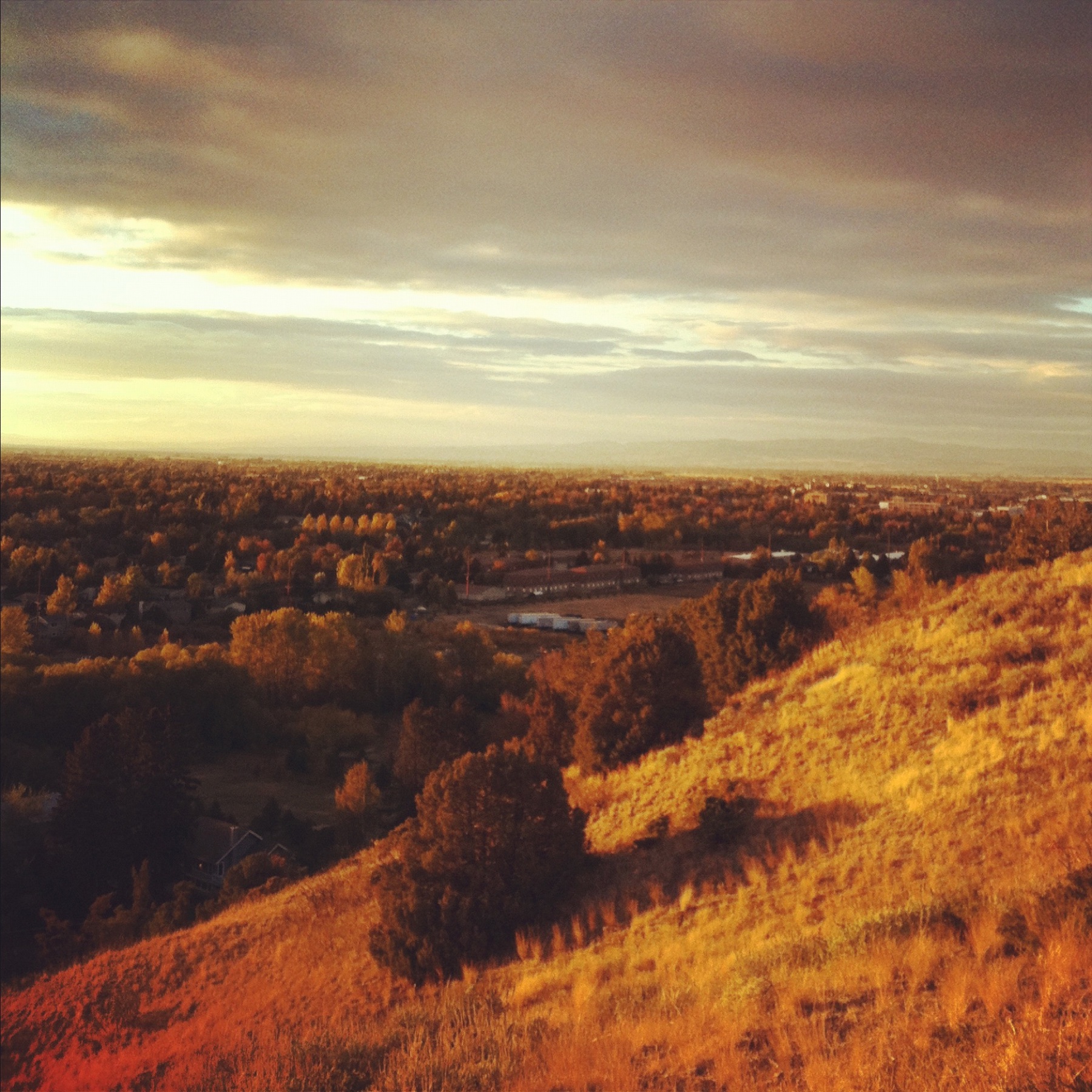
The point is, instead of finding a way out of the “meh” job that I held, I filled my life with other things that made me happier. It probably wouldn’t have been a bad way to continue except I was still feeling stifled and creatively shackled. So I made the decision to leave for good, to travel for a bit, to explore a new career path, and finally, to settle in Montana, a place free of distraction (save the occasional ski day) where I felt like I could focus. It was my very own Walden Pond. And it was the first step in setting myself up.

Except after five years of building a social life so full and vibrant, I didn’t know how to…well, not have that. I moved to Montana and went back to my old social habits. I went out with friends four nights a week, I attended potlucks and free cultural events. I went to yoga a few times a day so that I could simply be around people instead of alone in my house, facing a mountain of networking challenges and business building hurdles. In fairness, I was likely subconsciously clinging to something that felt safe in a new place where very little was familiar.

Boundary Setting
The truth was, I didn’t actually know how to work hard anymore. From my corporate job, I knew how to work until my job was done, and then I could turn my brain off and enjoy my life again.

But that’s not really how it is when you work for yourself or if you’re trying to find a new job. Your brain is always on, scrolling your To Do list, reminding you what still has to get done before bedtime. And more often than not, at least in the beginning, your brain isn’t reminding you to go to trivia on a Wednesday. It is reminding you to blog, pitch, rewrite your resume, create, design, brainstorm, email, follow up. It’s reminding you that you are the only one that’s going to get any of this done. It’s reminding you that you really need to try.

I needed to set myself up with boundaries and guidelines and sacrifices I was okay with so that I could get my work done. I had to quit the social scene. Not forever, but for a little while. Sometimes, just setting those boundaries is half the battle.

If you’re struggling to get started, or to find a job that you love, or make some real-deal progress in your career, here are some situations you may need to identify and work on eliminating:

• A negative relationship, whether with a significant other, or a parent or someone else who’s holding you back
• A negative job in favor of another (maybe not perfect but less emotionally draining) one
• Trolling the internet for validation, a “quick and easy way,” or “10 Ways to…”
• Making another huge life change because it seems “safer” (getting married, moving, finding a boyfriend/girlfriend)
• Feeling like you really want something else (like a relationship or living closer to your family)
• Feeling like you need to cultivate your town’s social scene every night or else you will devolve into a pit of anonymity and despair

You want to work for yourself, or actually find work that you love? Set yourself up so that you can. Eliminate (or at least minimize) whatever is distracting you so that you can single-task. So that you can organize and get some shit done. I’m not going to sit here and tell you to take a break for your sanity because, well, sometimes you need to be a little insane to do this self-employment thing, to live a life of which you are truly proud. And besides, you know when you need to take a break. You don’t need me to tell you.

What distractions do you find yourself keep you from doing your work? Have any of you imposed boundaries so that you can get your work done? If so, what are they?

Lauren CaselliLauren Caselli is a copywriter + content marketer. A Manhattan desk-jockey-turned-outdoor-junkie, she left her NYC apartment for the wide open valleys of Montana. A former fancy-pants party planner, she now works with small businesses to create sexy web copy, teaches yoga to + spends entirely too much time reading the internet. You can find her at her blog, Living Life Barefoot, or her website.